Author
Under Pressure: Antibiotics and Adaptation
- by KitchenPantryScientist
For centuries, people have harvested corn by hacking it off, six to fifteen inches above the ground. A caterpillar called the corn borer appears to have adapted its behavior to the corn harvest by travelling back down the stalk to a safe height, before spinning its cocoon. This week, the Science Times reported on a study that suggests that, by descending to the bottom of the stalks, the bugs avoid being chopped off when the corn is harvested. Researchers at McGill University think that “over generations, those caterpillars that did not descend, or did not go down far enough, did not survive.” In the article, Dr. Calcagno suggests that the likeliest explanation for this behavior is the selection pressure of harvesting over generations. In other words, only the caterpillars that crawled down survived to reproduce and make baby bugs, until only caterpillars with the family trait of crawling down remained in the population.
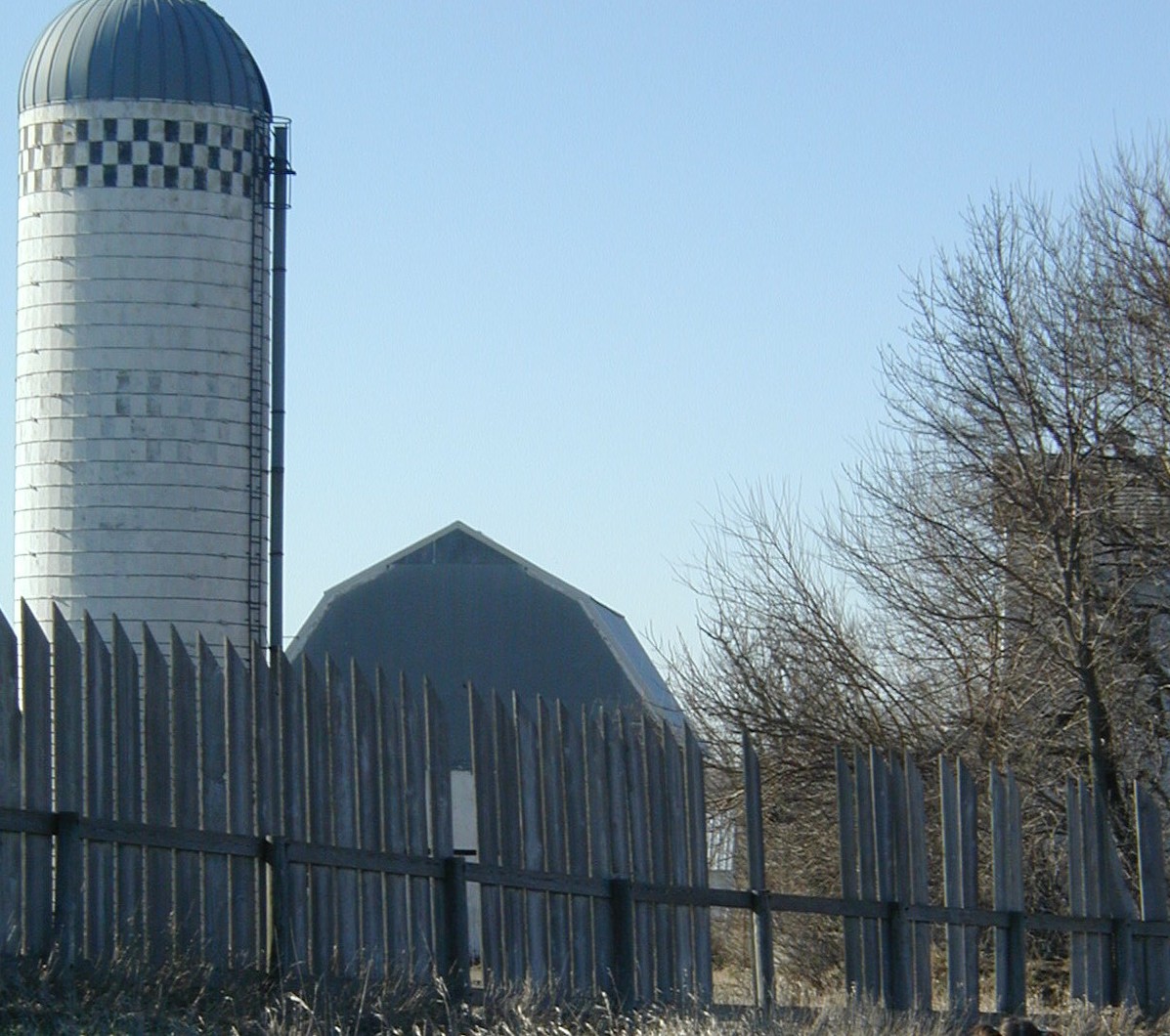
Our family farm in Iowa was once a dairy farm.
Similar forces are at work on bacteria that live in animals and humans, only instead adapting to harvest, they’re adapting to constant exposure to antibiotics. As a result, many harmful bacteria are finding ways to “outsmart” antibiotics. This is, in part, due to the mind-boggling volume of these drugs fed to animals produced for food. I can’t give you a number, because according to the Center for Disease Control’s website, the amount of antibiotics fed to farm animals is not available to the public or to government agencies.
Feeding animals antibiotics helps them grow. No one knows exactly why. Unfortunately, using these drugs as growth enhancers, or even to protect them from disease, often creates antibiotic-resistant strains of bacteria that have the potential to end up in our food supply. These drug-resistant pathogens are especially dangerous to people who live and work on farms ( just ask Russ Kremer, who was gored by one of his hogs and nearly died from an antibiotic-resistant infection.) In reponse to the global threat presented by antibiotic resistance, the World Health Organization recommended that antibiotics used in humans should not be used to promote growth in food animals.
Healthy animals occasionally need to be treated for infections, but feeding animals antibiotics for growth benefits is a risk no one should be taking. A huge amount of money is spent each year on these drugs so producers can get top dollar for their animals. My worry is that the additional costs to public health are not being considered, especially if our pharmaceutical arsenal is rendered useless by this practice.
Want to learn more? You can check out the CDC’s website for a wealth of information on antibiotic resistance. Their program “Get Smart on the Farm” promotes appropriate antibiotic use in animals.
FRESH
- by KitchenPantryScientist
 Happy Earth Day! This weekend, we planted a garden. Few things make me happier than watching my kids digging in the dirt, planting things. Maybe it’s because I come from a long line of farmers, or maybe it’s the sun-warmed, homegrown tomato I can almost taste just by thinking about it.
One of the most interesting books I’ve read recently is Michael Pollan’s “Omnivore’s Dilemma,” which follows four meals from field to table (from McDonald’s to foraging for mushrooms and hunting a wild boar.) It reminds the reader of how disconnected we have become from the sources of our food. One of my favorite parts of the book talks about Joel Saletin, who is a seminal figure in the sustainable agriculture movement and probably the most famous farmer in America. His bio on the FRESH movie website says:
“Joel calls himself a grass-farmer, for it is the grass that transforms the sun into energy that his animals can then feed on. By closely observing nature, Joel created a rotational grazing system that not only allows the land to heal but also allows the animals to behave the way the were meant to – as in expressing their “chicken-ness” or “pig-ness”, as Joel would say.”
 Joel Saletin
 Ana Joanes
This week, Joel is in town with Ana Joanes, who has made a documentary called “FRESH” that celebrates the farmers, thinkers and business people across America who are re-inventing our food system. It’s about food, but it’s also about economics, community and social justice. Last weekend, I was lucky enough to meet both Ana and Joel while volunteering at one of Joel’s lectures and was impressed with their optimism and sense of humor. Ana recently told planetgreen.discovery.com “I just had a little girl. Her name is Maayan. And, as clichéd as it may sound, I just want to do right by her. I don’t know what reality she’ll face when she reaches adulthood, but I’m trying my best so she doesn’t have to pick up the pieces of our recklessness and inaction.”
I saw FRESH last night in Minneapolis and loved it! The movie is just 70 minutes long, but you will want to talk about it for two hours afterwards! Tonight’s the last night it’s showing, so if you’re in the Twin Cities, don’t miss it! You can order tickets here.
The movie brings up interesting points about monocultures, antibiotic resistance, high fructose corn syrup, the corn industry (which my grandparents’ farm in Iowa is a part of,) and beneficial bacteria. I’m planning to explore many of these issues on this blog by writing a weekly post about food science between science experiments! Stay tuned!
Words That Made a Difference
- by KitchenPantryScientist
Congratulations to Michael Moss, of the New York Times, for winning a 2010 Pulitzer Prize for his expose “The Burger That Shattered Her Life.” According to the New York Times, his reporting on the ground beef industry “led the Agriculture Department to review it’s safety procedures and a major slaughterhouse and food retailer to agree for the first time to test raw ingredients that would go into ground beef.”

I remember reading his work and being shocked to learn that many ground beef producers wouldn’t sell to retailers who wanted to retest their meat for E. Coli contamination. The system still isn’t perfect (see my post on ground beef additives,) but at least someone is listening.
Wonder
- by KitchenPantryScientist
I’m reading “Einstein’s God” by Krista Tippet right now, and came upon this great autobiographical account by Albert Einstein. It seems that he had a childlike wonder about the world that lasted well into adulthood and helped him to become a great thinker.
“Why do we come, sometimes spontaneously, to wonder about something? I think that wondering to one’s self occurs when an experience conflicts with our fixed ways of seeing the world. I had one such experience of wondering when I was a child of four or five and my father showed me a compass. This needle behaved in such a determined way and did not fit into the usual explanation of how the world works. That is that you must touch something to move it. I still remember now, or I believe that I remember, that this experience made a deep and lasting impression on me. There must be something deeply hidden behind everything.”
Krista then writes, “After seeing that compass, Einstein became mesmerized in turn by light and gravity. He spent his life seeking to comprehend the order “deeply hidden behind everything” and to describe it mathematically.”
What have you wondered about lately?
Lake Ice Going Out- Cool Crystals
- by KitchenPantryScientist
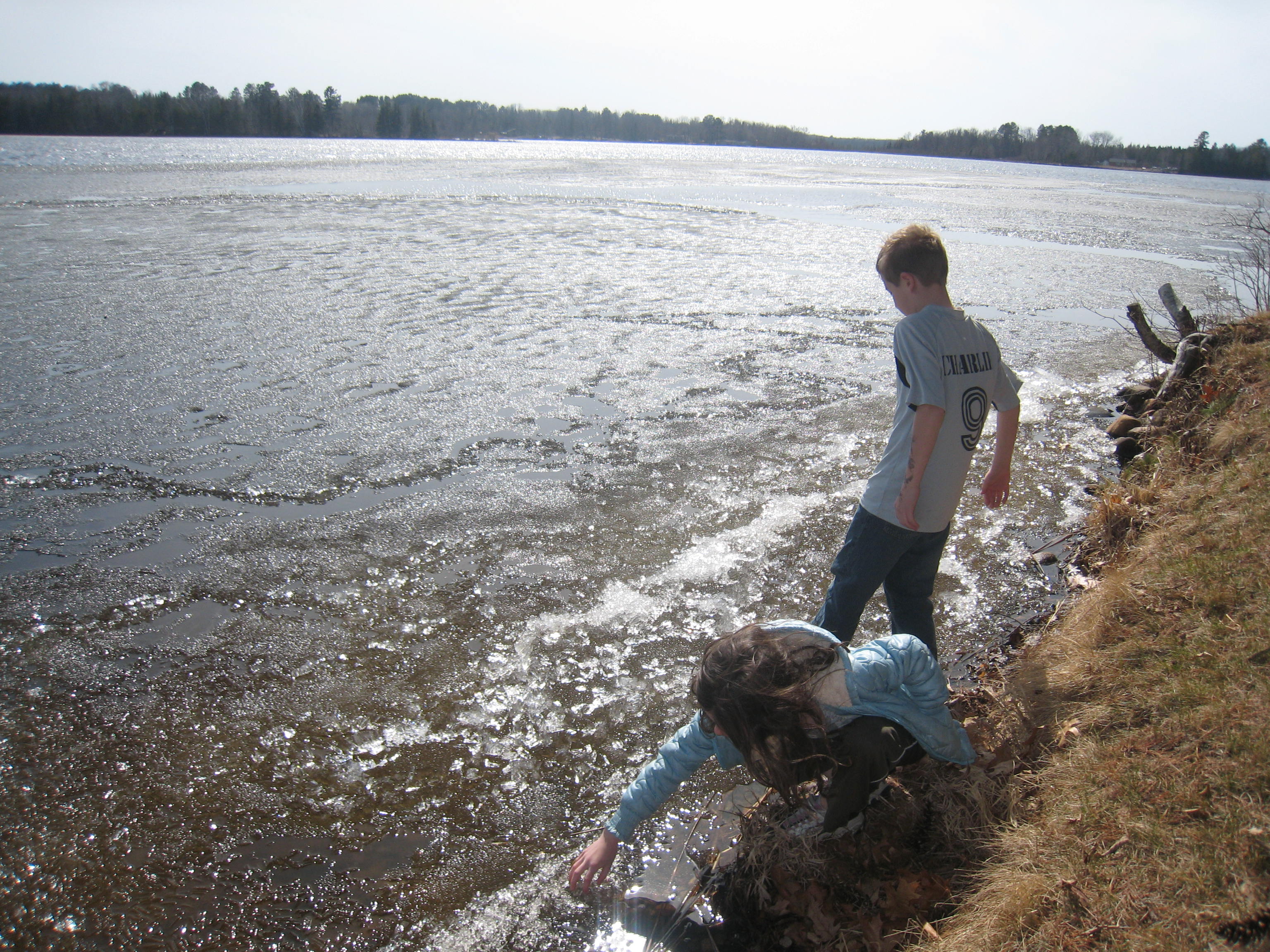
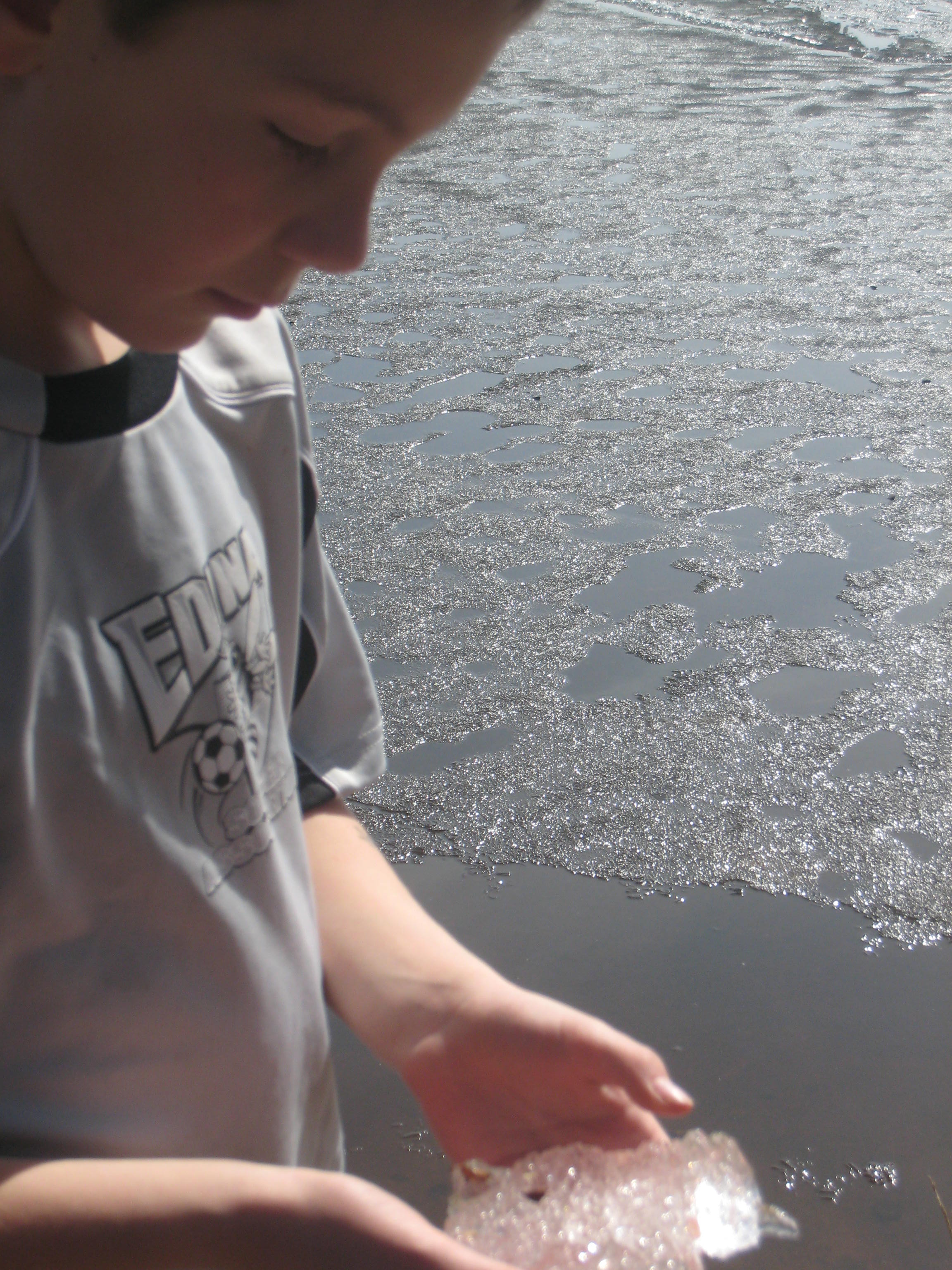
We were up at the lake last week when the ice went out. It was amazing. We arrived at noon to a lake whose surface was half covered with ice and woke the next morning to clear water. The wind was blowing the ice into shore and it broke into millions of crystals that sounded like a field of windchimes. The crystals were so sharp that our dog cut his foot.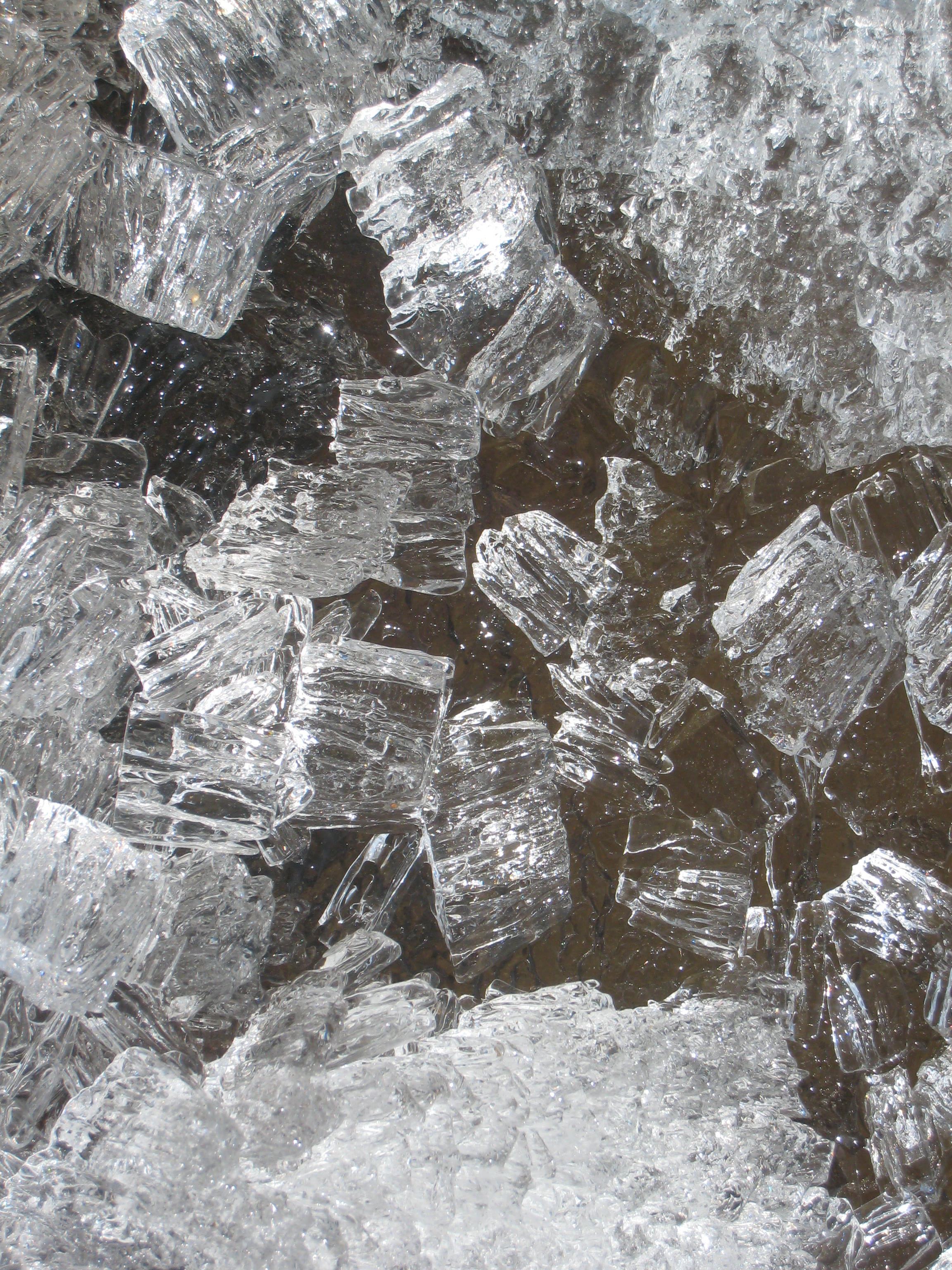
If you’re interested, you can watch the very wobbly, but cool video I took of the ice blowing around. You can see the ice crystals being pushed up and out of the water into piles. Listen, and you’ll hear the ice crystals clinking together!
[vsw id=”qt9HKExG2To” source=”youtube” width=”425″ height=”344″ autoplay=”no”]
This week, the kids and I are going to grow alum and sugar crystals, so be sure to check for the upcoming post!
Backyard Birding
- by KitchenPantryScientist
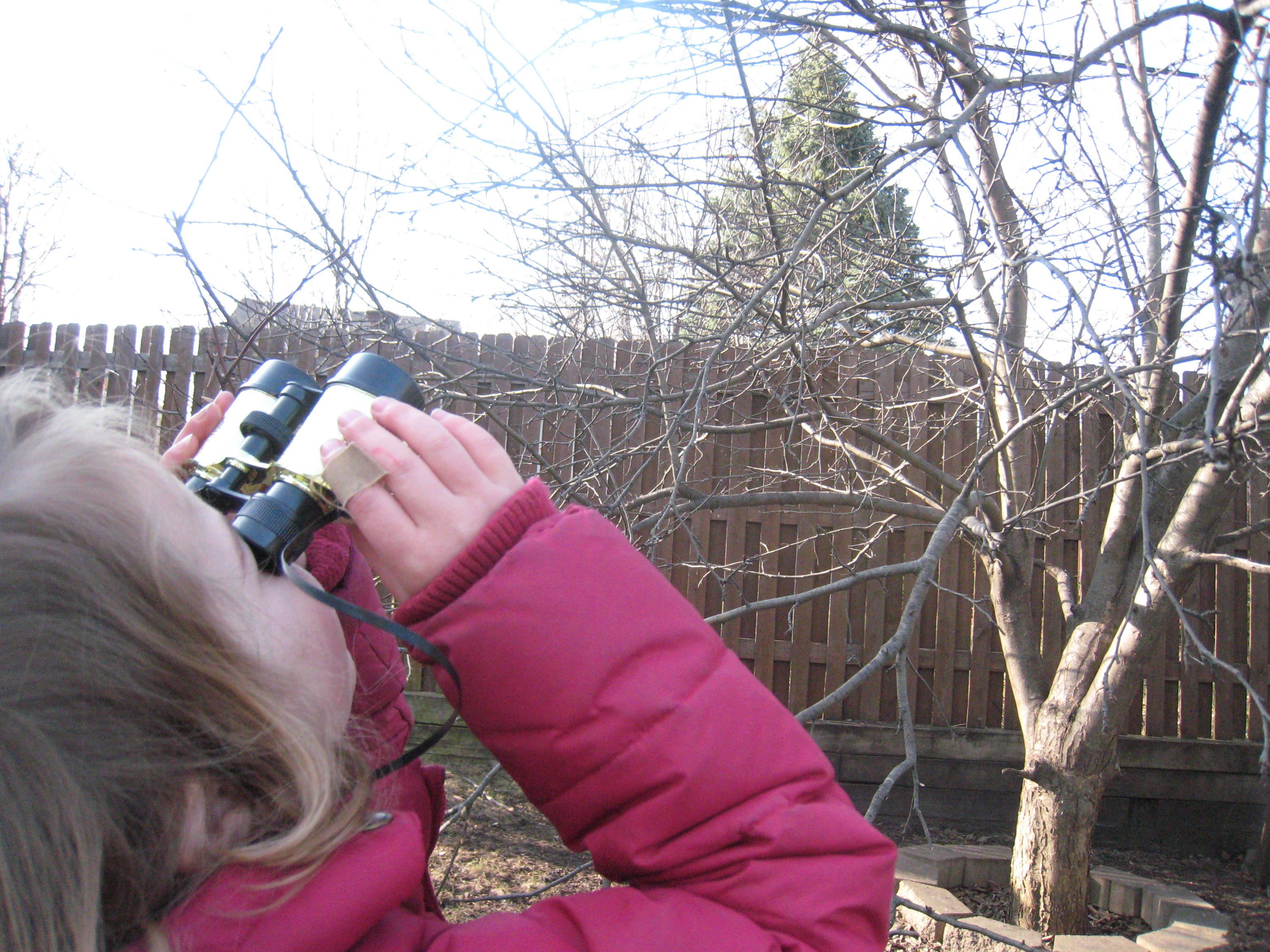
The weekend started off when I took our four-year old to see the movie “How to Train Your Dragon” (I think I liked it as much as she did) and left the theater talking about what it would be like to fly. We did a craft project, taking a butterfly from egg to wings, and toppped Sunday off by going for a bird-watching walk through the neighborhood and nearby woods.
With the arrival of spring in Minnesota, birds are everywhere! Cardinals are singing outside as I type. On our walk, we saw dozens of robins and woodpeckers. A hawk soared over and a nearby crow cawed at a Turkey Buzzard that soared down too close to his meal. I knew it was a buzzard because it was entirely black and I recognized the shape of its wingtips.
Do you know how to tell what kind of bird you’re looking at? The study of birds is called Ornithology and bird watching can be fun for all ages.
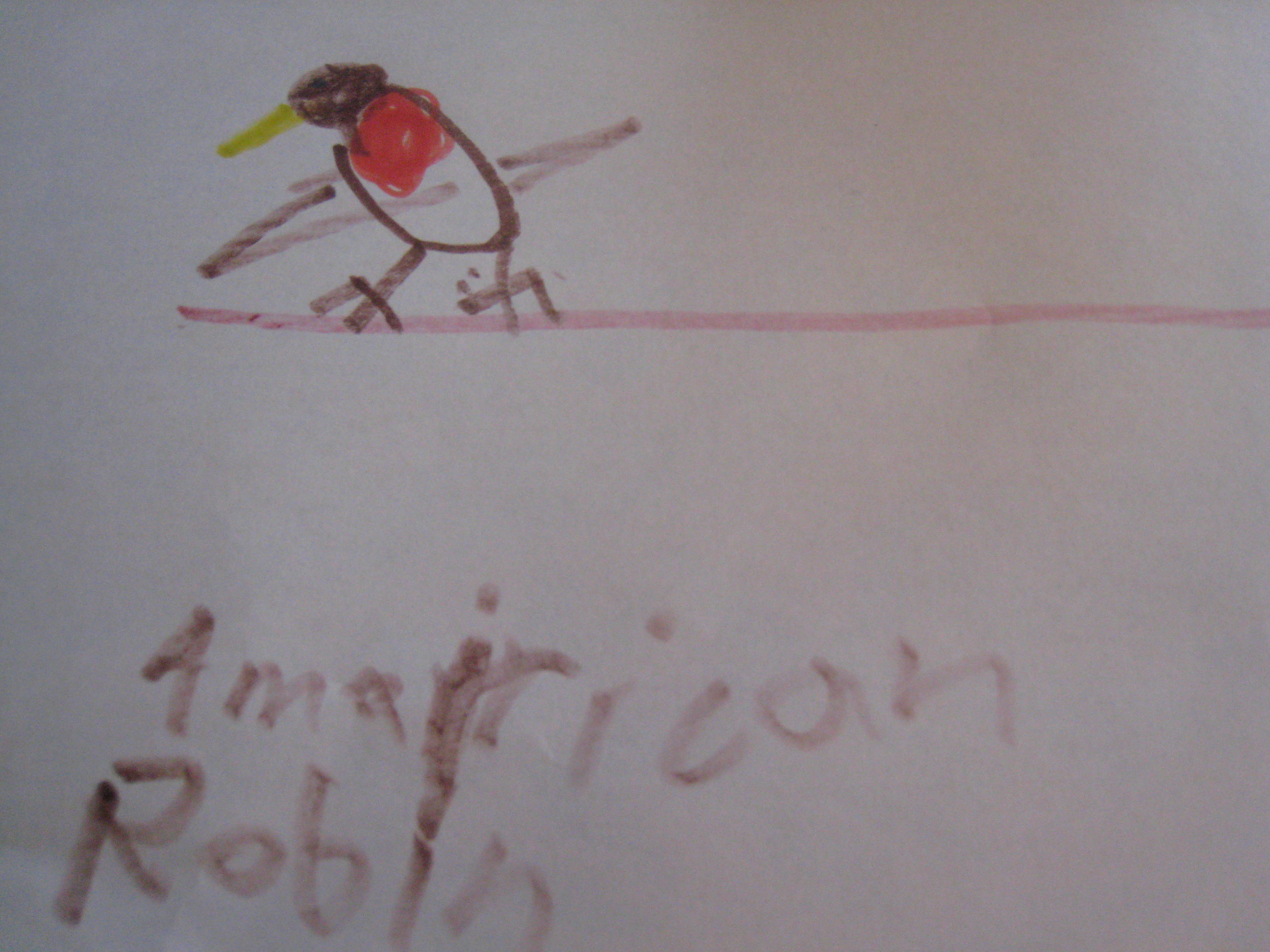
Why not go on a bird walk with your kids? Take a bird guide, if you have one, a notebook (their science notebook would be perfect) or a piece of paper and write down or draw what the birds you see look like. Binoculars would be great too, but aren’t necessary. Be sure to notice what color the birds you see are, special markings they might have, how big they are, and how their wings are shaped. You can even memorize or record how their song sounds. Do they sing “chick-a-dee-dee-dee” or “who-cooks-for-you?” If you feel like it, count how many robins or cardinals you see!
When you get home from your walk, you can use a Bird Identification book to look up your discoveries, or you can go online and use one of the many, interactive resources there. I decided to use whatbird.com and allaboutbirds.org from the Cornell Lab of Ornithology, to try to identify the hawk that we saw. Although I thought it was a red-tail hawk, I wasn’t sure. Both websites were helpful. Whatbird.com offered a visual search, where you could choose from different fields, like color and wing shape to narrow your identification. It worked pretty well, but didn’t seem foolproof. Allaboutbirds.org had a field where you could search birds by name and shape, which had nice photos you could use to identify what you had seen. Your kids could even make a guide of birds in your area!
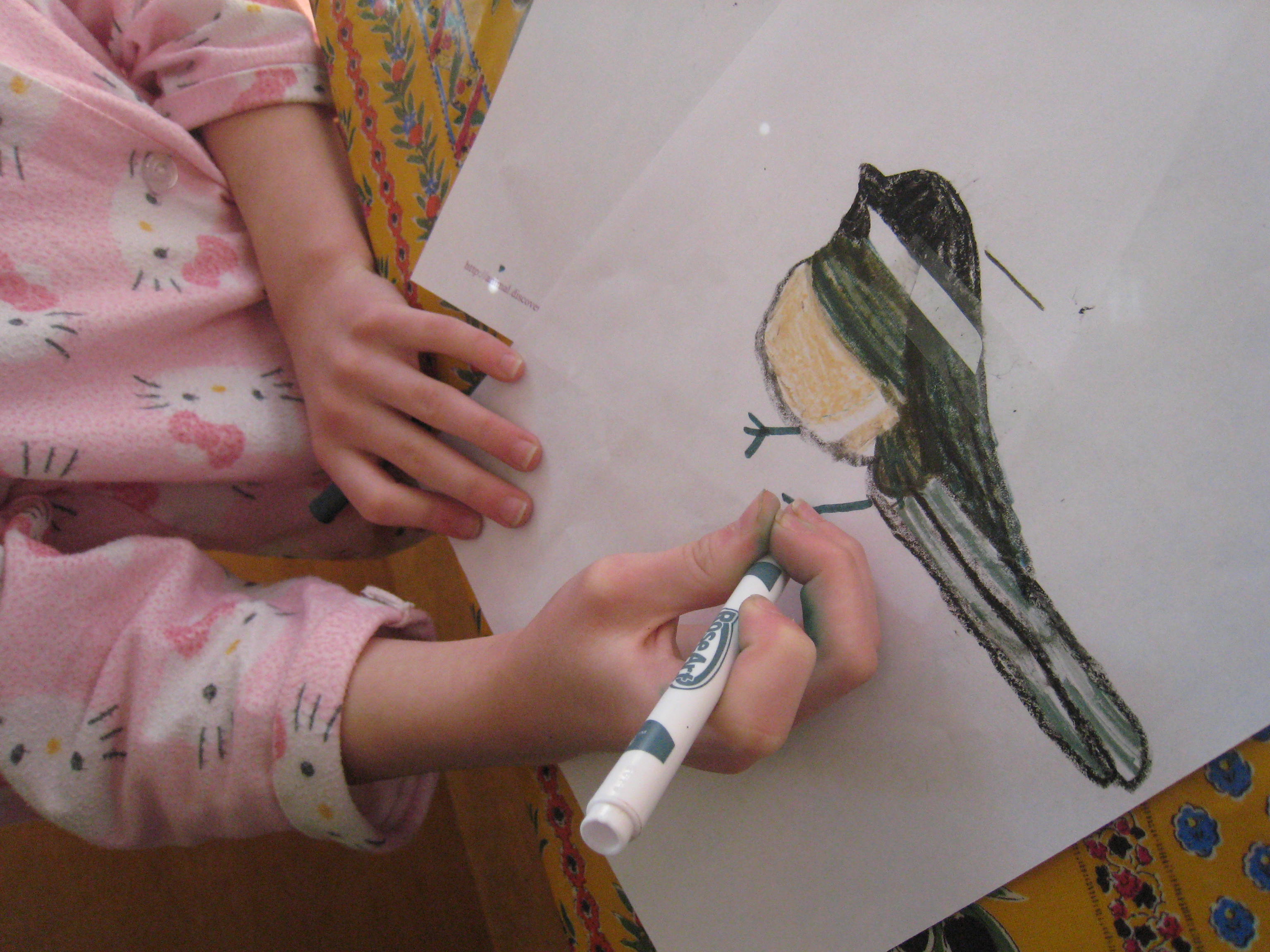
So get those kids outside and let them hone their observations skills! No one offers a better show at a better price than Mother Nature!
Spectacular Eggsperiment- Natural Dyes
- by KitchenPantryScientist
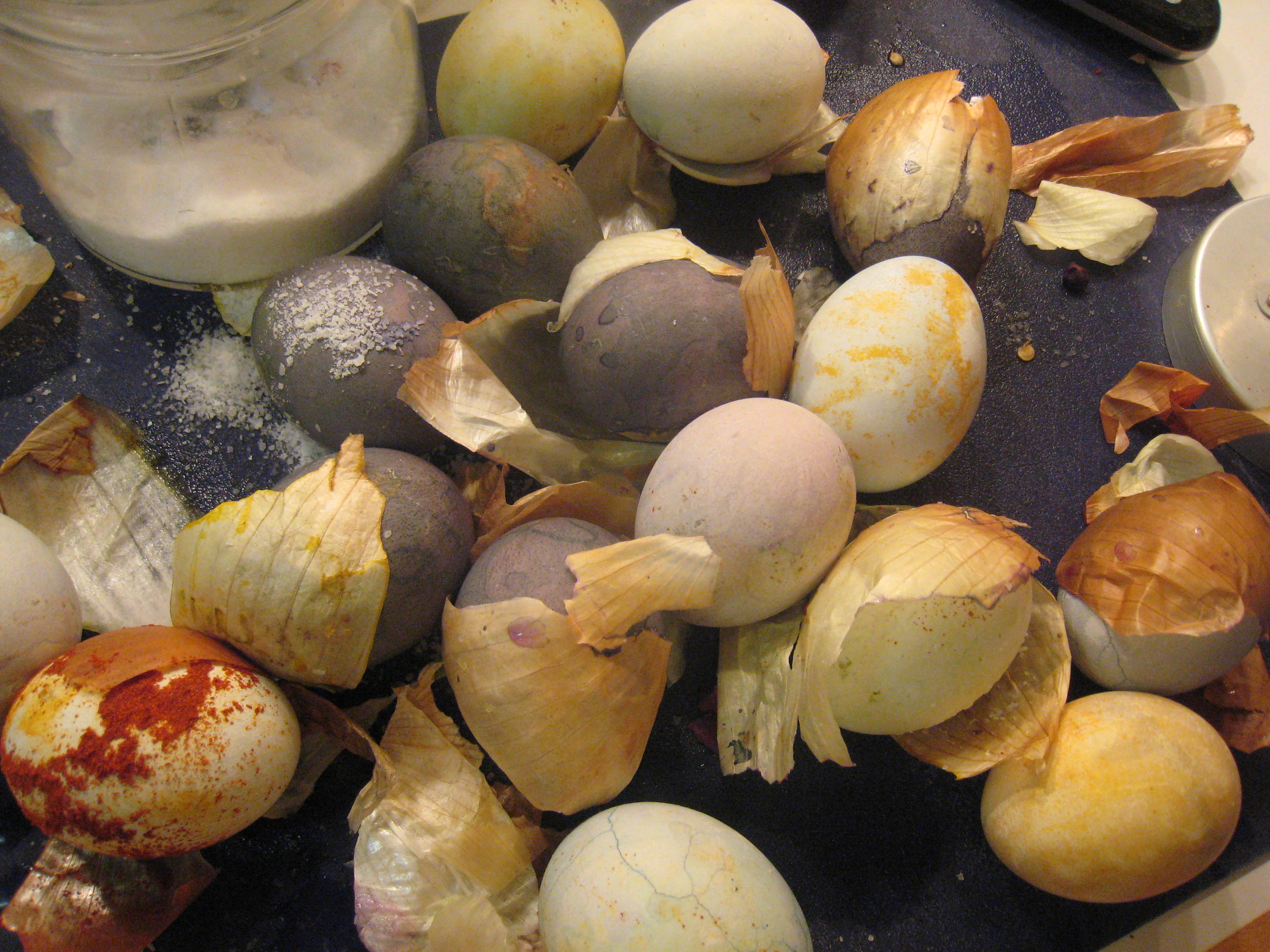
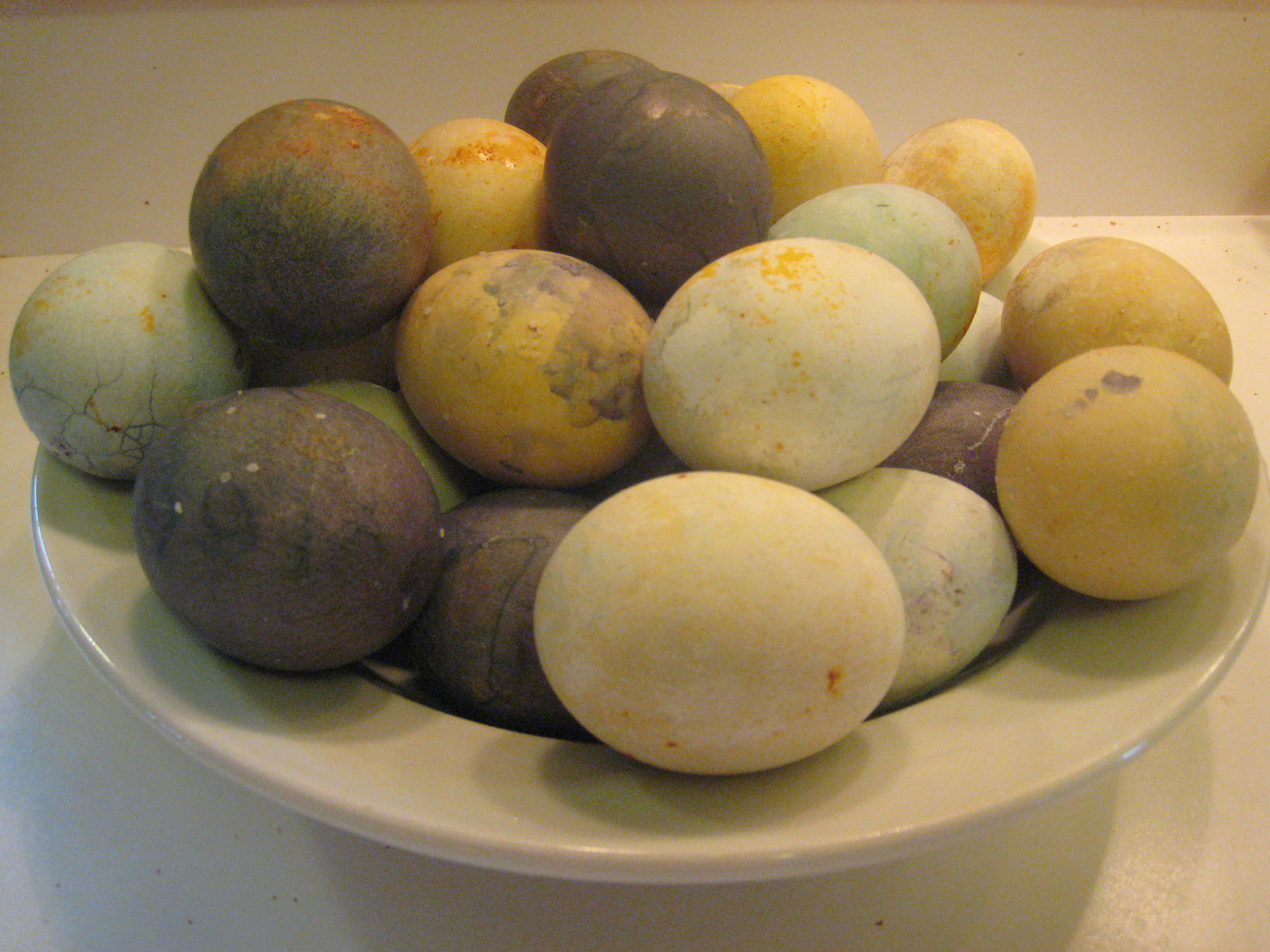
Make your own egg dye! Boil colorful fruit, vegetables and spices with 4-8 cups water and a few Tbs. of white vinegar. When the water is boiling, add raw eggs and boil for 10 minutes. The pigment in the fruits and veggies will be absorbed by the egg’s porous surface as they cook. Let the eggs sit in the dye until cool. Then, wrap the wet eggs in onion skins or rub with paprika for yellow. We had the best luck with blueberries, curry and red cabbage. Experiment to see what makes the best colors! What worked best for you? Coffee? Tea? rhubarb? Don’t forget to eat your creations. Hard-boiled eggs make a great snack!
This Week in Science and Health
- by KitchenPantryScientist
I found lots of interesting tidbits in today’s Science Times!
In science news, my son was fascinated to learn that ABE, a pioneering undersea robotic explorer, appears to have implodedunder about 10,000 feet of water while searching for hydrothermal vents in the sea of southern Chile. We also read that “Fearless Felix” Baumgartner is going to jump from a helium balloon in the stratosphere, 120,000 feet above earth in an attempt to be the first skydiver to break the speed of sound.
In health news, The Science Times today tells us that a study showed that when soda prices went up, consumers health improved. (Not that surprising, really.) There was an interesting article about new research showing that taking an anti-inflammatory related to aspirin helped Type 2 diabetes patients manage their disease and even lower their blood sugar. This seems to be further evidence that inflammation plays a role in diabetes. There is also a good article about Dr. Thomas Frieden,the new director of the Centers for Disease Control and Prevention in Alanta. I was happy to read that he’s reorganizing the agency to give scientists better access to top leadership and popping into research labs on a regular basis to see what’s going on.
Imagination Fair
- by KitchenPantryScientist
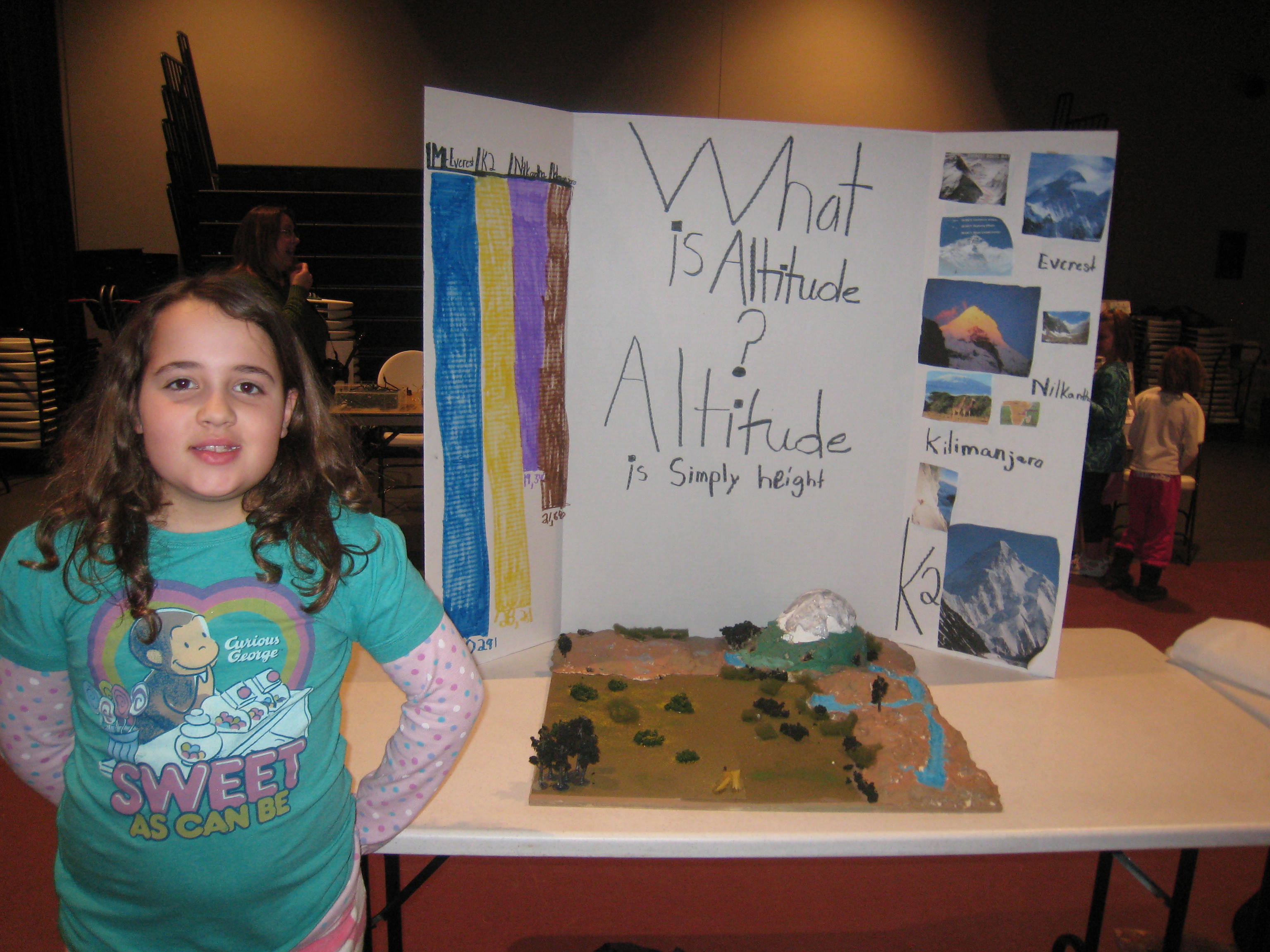
Our school’s Imagination Fair is one of my kids’ favorite events of the year. I love it too. One of the best things about this gathering is that it is not a competition. I also love that there are no rules and guidelines. My kids spend their days following rules and competing against others, whether it is in school or in sports. For the Imagination Fair, kids simply create, demonstrate, or show off something that interests them and then have a great time walking around and checking out everyone else’s projects.
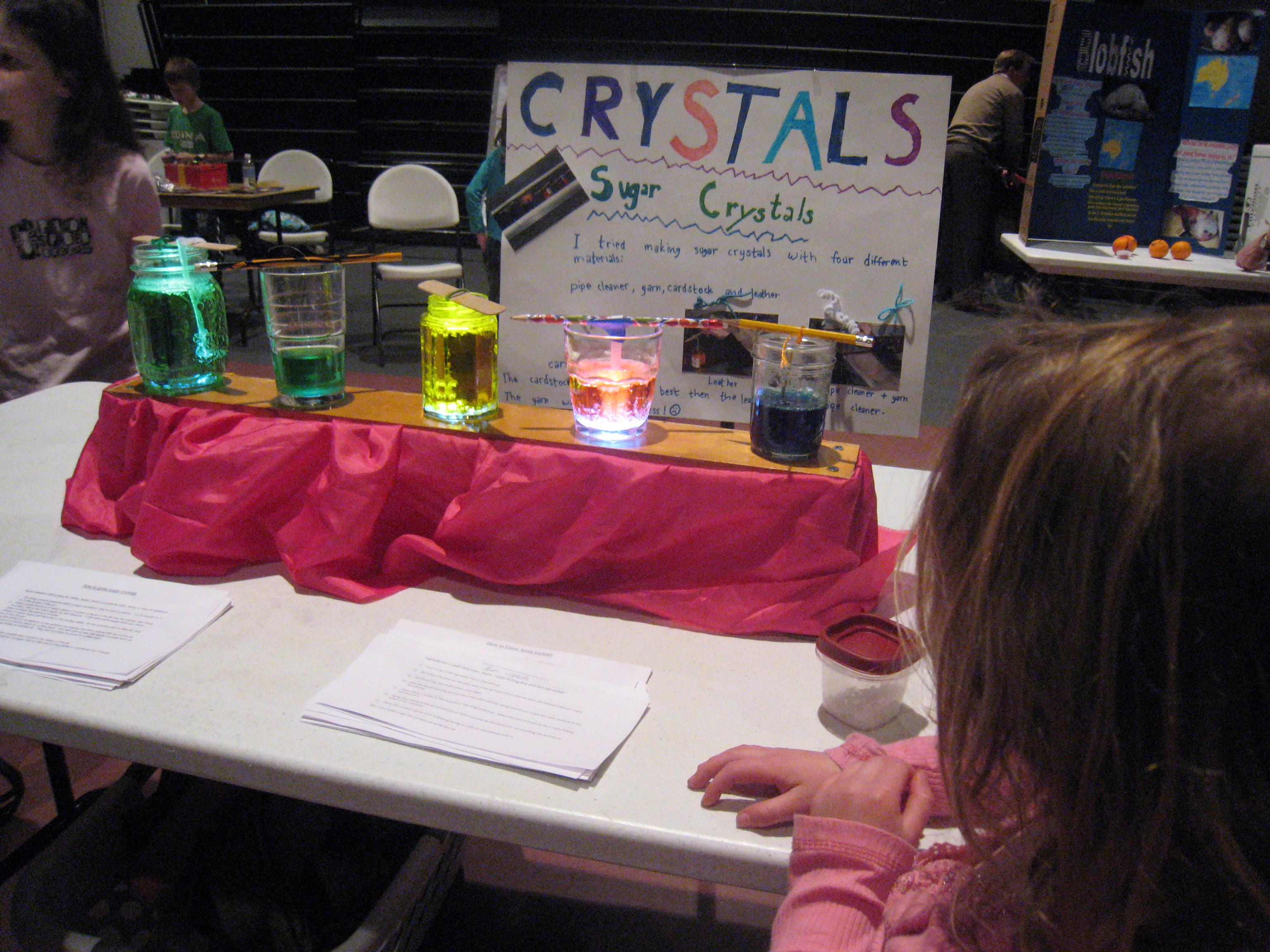
Sugar cube castles towered over posters about magnets, and jars full of home-grown crystals stood next to Lego creations. There were plastic sharks wired to foam board, a cardboard reproduction of the Olympics half-pipe and a poster about money of the world. You could pet a bunny or “test your knowledge” to win a sucker. My four-year old especially loved the circut table, where one boy had inventions that spun and beeped when you made electrical connections.
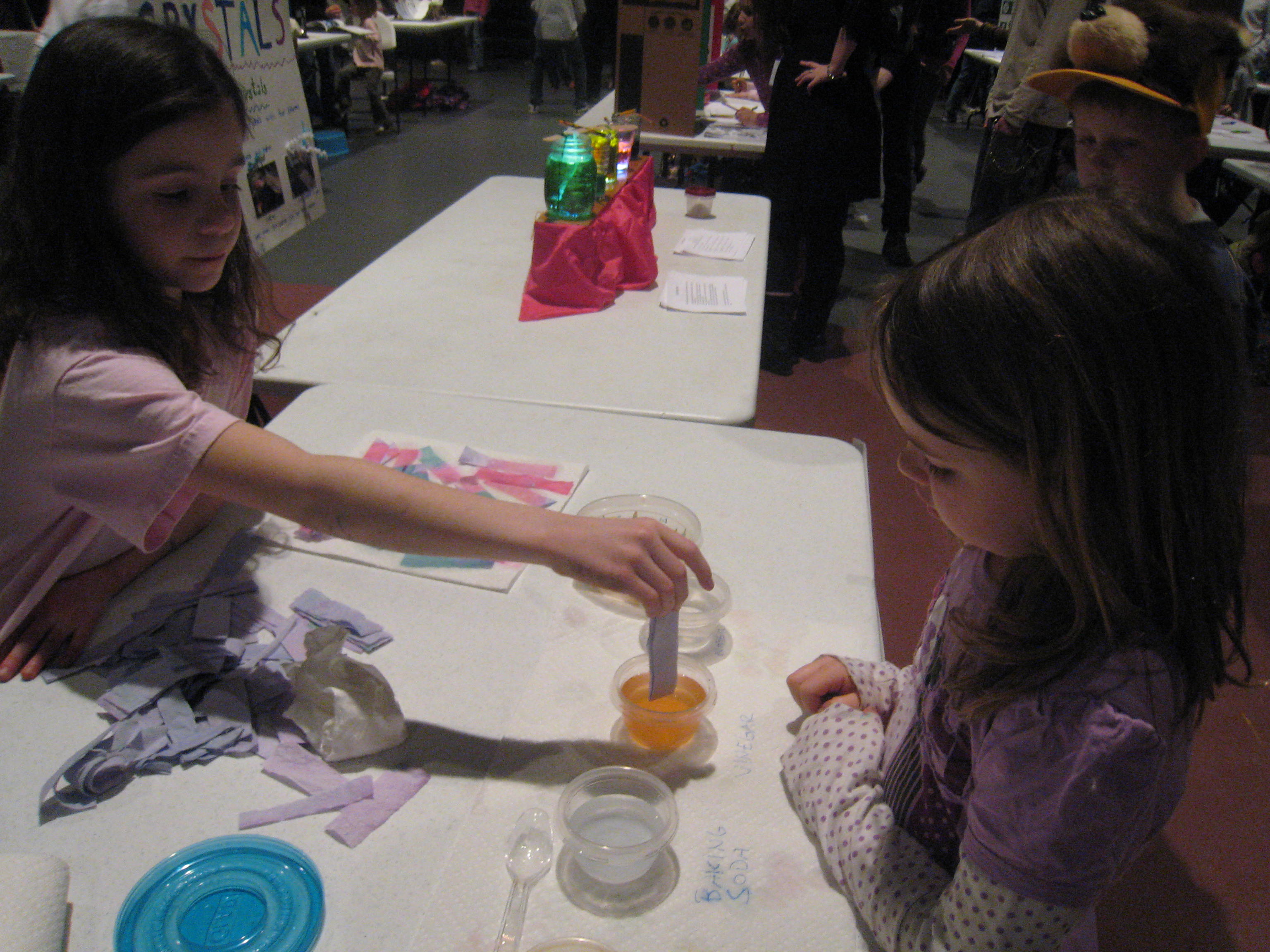
I’m thinking of putting an “Imagination Fair” together this summer, in my back yard, for the neighborhood kids. What better way to let kids be kids?
Sweet (and Salty) Lava Lamps
- by KitchenPantryScientist
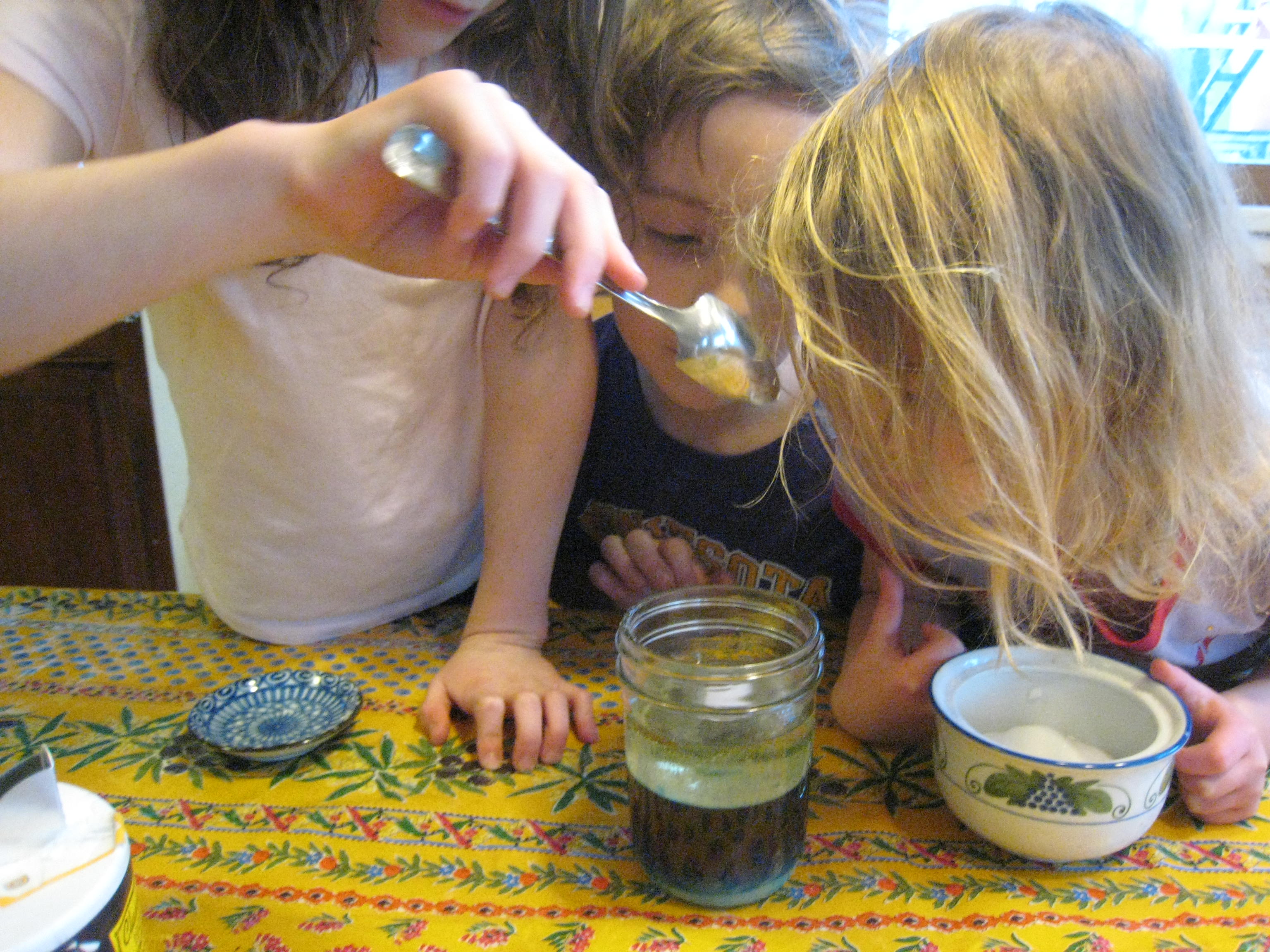
Pull out a jar, a bottle of vegetable oil, some food coloring, salt, sugar, and water to mix up this easy experiment! 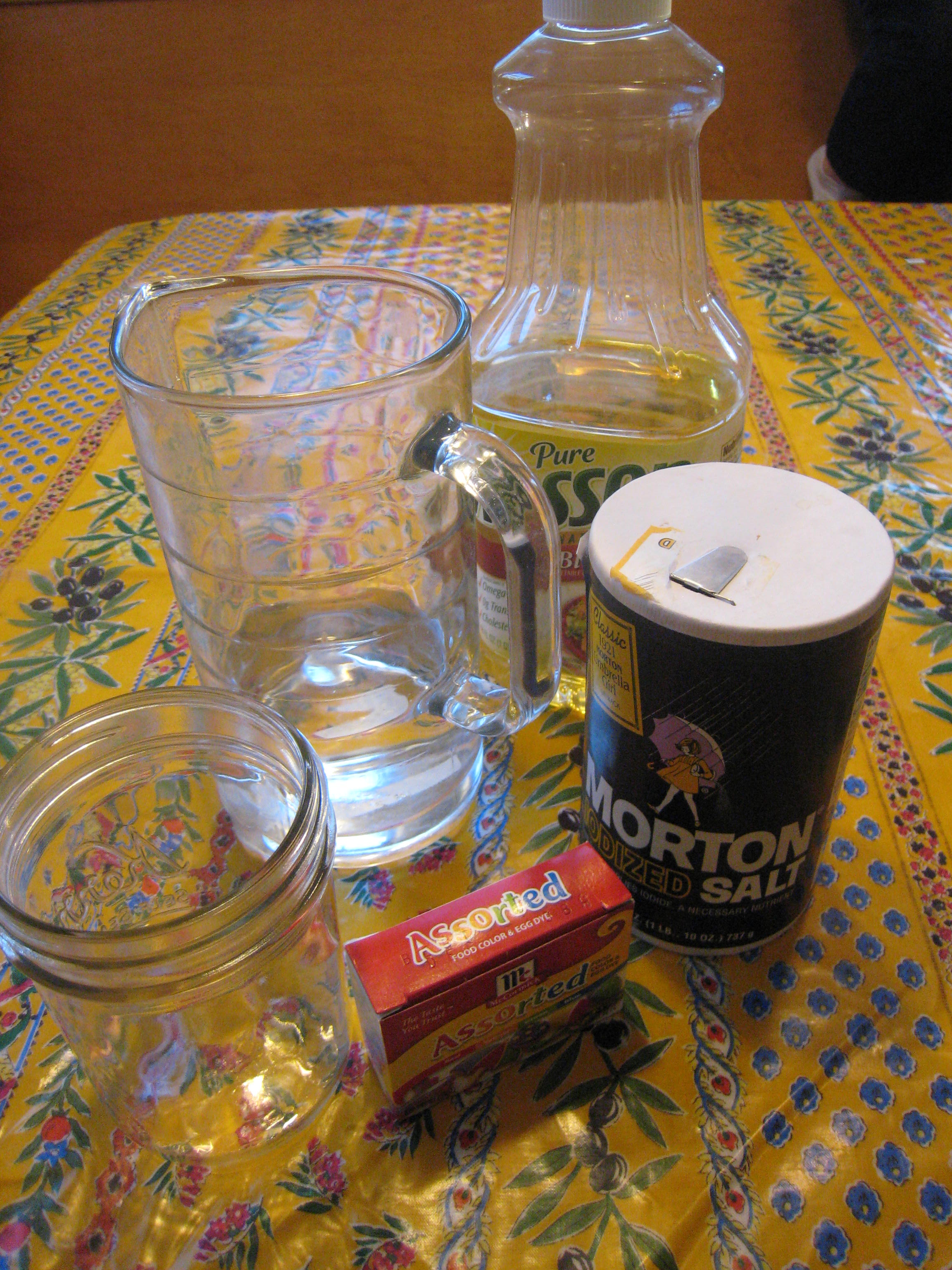
Fill the jar about halfway up with water and add a few drops of food coloring for contrast. Add about half as much vegetable oil to the jar and watch it float to the top. Now, a spoonful at a time, add salt to the jar. The salt will pull some of the oil down with it, but will release the oil as it dissolves and the oil will float back to the top. This will make your science experiment look like a real lava lamp. Keep adding salt to make it keep working. Now, try adding sugar or even sand. Kosher salt worked really well!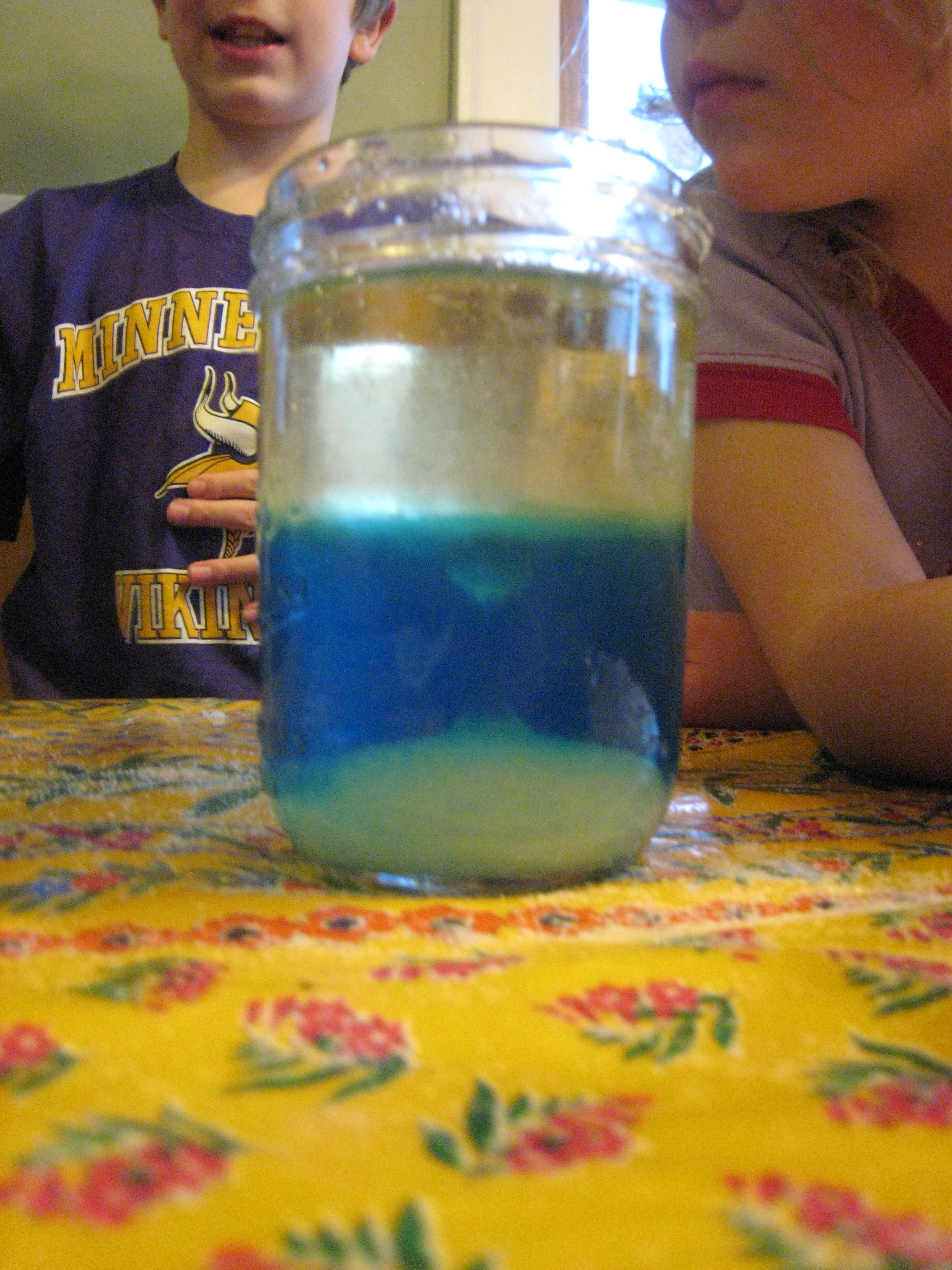
What worked the best for you? Do you know why oil floats to the top of the water? Email me your answers in the comments section of this post for a chance to win a KITCHENPANTRYSCIENTIST.COM tee shirt (size M.) I’ll do a drawing for a winner in two weeks! Thanks to PBSkids/DragonflyTV’s website for this fun idea. Check out their website for more great kids’ science!