Author
Earth Day Science
- by KitchenPantryScientist
On April 21st (the day before Earth Day), the Science Museum of Minnesota will celebrate Earth Day and open their new Future Earthexhibit to the public. Exploring the amazing planet that nurtures and sustains us, the thought-provoking exhibit examines climate science, looks at the impact of humans, and considers Earth’s future. Today’s young people will play an essential role in determining that future, and it’s essential that we raise our kids to be critical thinkers, as well as creators and innovators! Abby Harrison, a.k.a. Astronaut Abby, wants to be the first person on Mars and she visited Kare11 Sunrise news with me to talk about NASA and Earth Day.
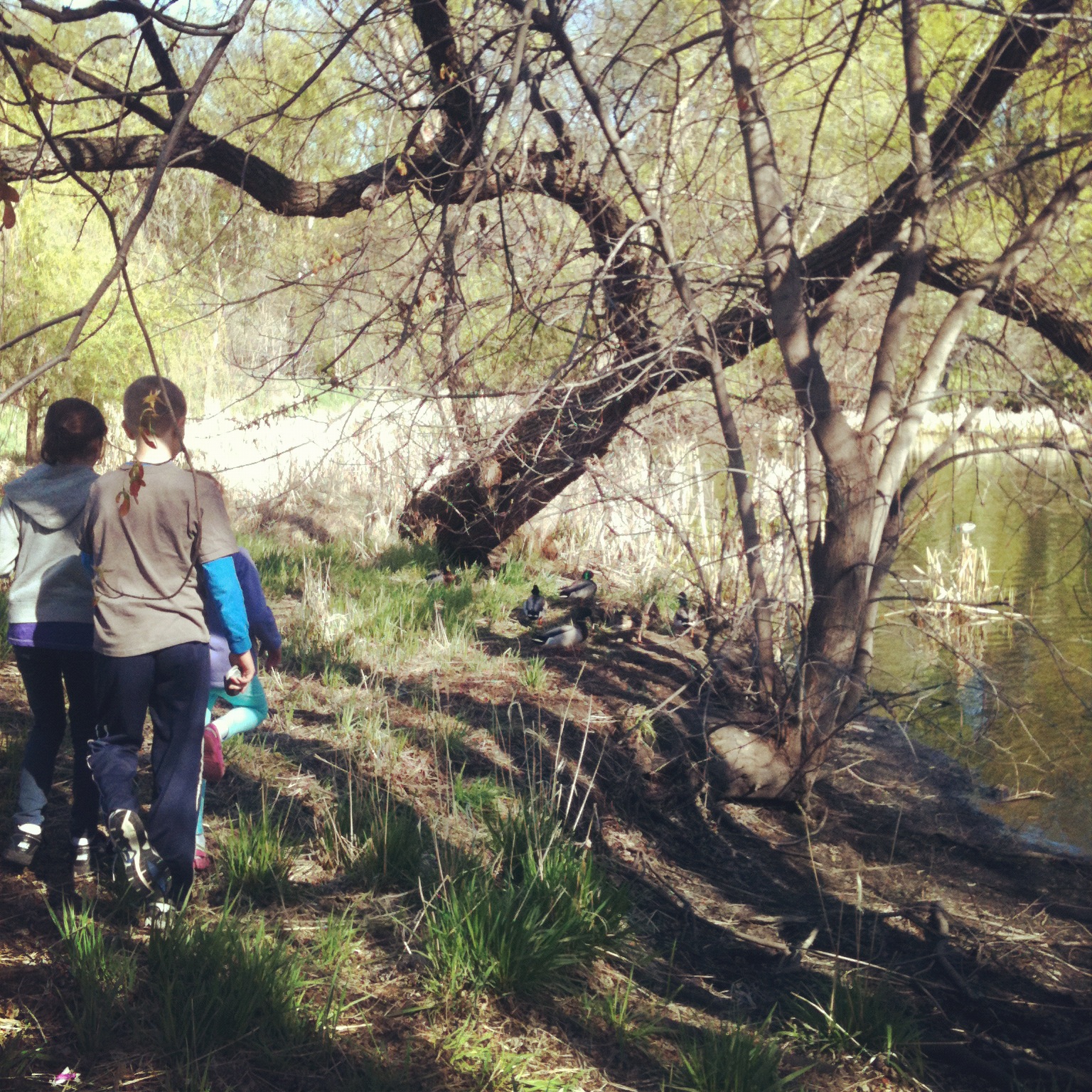 Every time you encourage a kid to ask “why?” or get them out into nature, you’re engaging their scientific brains! When they see you recycle, turn out the lights, walk instead of drive, or pick up a piece of trash, you’re teaching them lessons about stewardship and responsibility.
Here are some easy experiments that would be fun to do with your kids to help celebrate Earth Day. If you click on the experiment name, it will take you to directions and photos!
Window Sprouts: Plant a bean in a plastic baggie with a damp paper towel and see how plants need only water and air to sprout roots and leaves. Here’s a short video demonstrating how to put a window garden together.
Homemade Solar Oven: Using a pizza box, aluminum foil, plastic wrap, and newspaper, you can harness the sun’s energy to cook your own S’mores! Try it!
Nature Walk Bracelets: Wrap some duct tape around your wrist (inside out) and take a walk, sticking interesting natural objects like leaves and flowers to your bracelet. It’s a great way to get outdoors and engage with nature!
Carbon Dioxide and Ocean Acidity: See for yourself how the carbon dioxide in your own breath can make a water-based solution more acidic. It’s the same reason too much carbon dioxide in Earth’s atmosphere can be bad for our oceans.
Composting: Be a composting detective. Bury some things in your back yard (away from power cables) and dig them up in a few months to see how they look. Composting reduces methane gas emissions (a greenhouse gas) from dumps.
Diffusion and Osmosis: See for yourself how chemicals we add to water, put on our streets to melt ice, and spray on our lawns and crops can move into our soil, ground water, rivers, lakes and oceans.
Solar Water Purification: Another great illustration of the greenhouse effect and a fun experiment in general. Requires hot sun and some patience!
To continue to thrive, we’ll need countless innovations in energy, agriculture, health and environmental stewardship. Our children are our greatest natural resource, and we will depend on them to make a better future for us all. It’s up to us to nurture them, educate them, foster their innate sense of curiosity and fan their creative spark. Happy Earth Day!
Incredible “Feets” with Eggs
- by KitchenPantryScientist
Would you be surprised if I told you that you could stand on a carton of raw eggs barefoot without breaking them? Or that you can squeeze an egg with all your might without even cracking it (provided there are no cracks in the egg and you’re not wearing a ring?)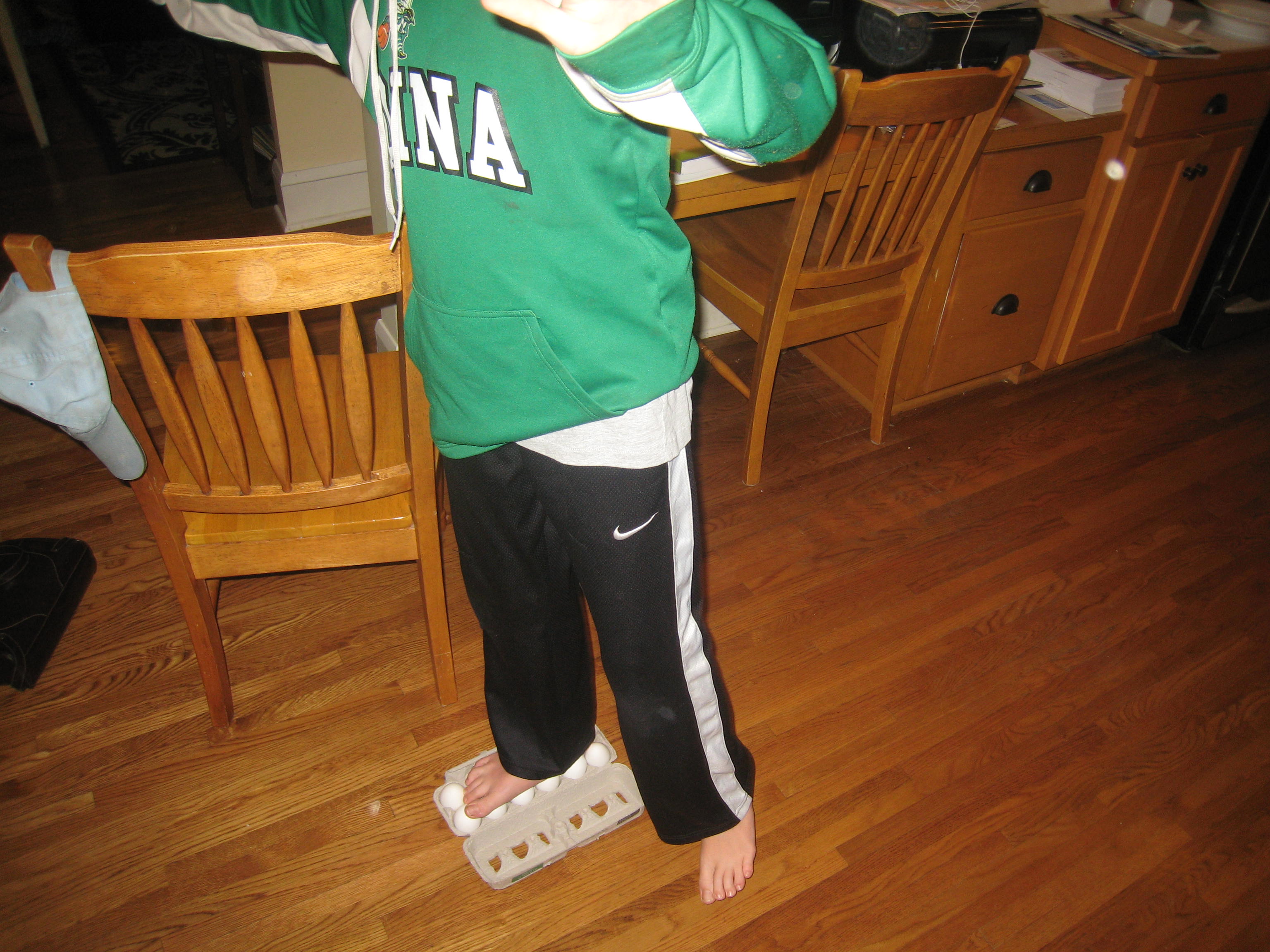 Here’s a video of us doing these eggsperiments on Kare 11 Sunrise news!
Chicken eggs have delicate enough shells that chicks can peck their way out, but their architecture is nothing short of amazing. Their arched shape makes them able to handle large amounts of pressure without cracking, which is extremely important, since hens must sit on them in order to hatch them out. Humans use arches too, for designing strong building and bridges.
Remove any rings you’re wearing, place a raw egg in a plastic baggie and wrap your hand around it evenly. Squeeze as hard as you can. Did you break it?
 If you’re feeling brave, open a carton of raw eggs, remove any that are cracked and make sure they’re all pointing in the same direction (pointy side up or round side up) and set them on the floor.
Remove your socks and hold on to a chair or someone’s hand. Carefully step onto the eggs with your entire foot. Remember: pressure is force per unit of area. The idea is to equally distribute your weight, and therefore the pressure, across all twelve eggs. Let go of the chair.
Did it work? How important do you think it is to keep your foot flat? What would happen if you tried the same experiment in pointy high-heels?
Remember to wash your hands after touching raw eggs so you don’t spread Salmonella bacteria around!
Diffusion and Osmosis experiments
- by KitchenPantryScientist
 Diffusion is the name for the way molecules move from areas of high concentration, where there are lots of other similar molecules, to areas of low concentration, where there are fewer similar molecules. When the molecules are evenly spread throughout the space, it is called equilibrium. Imagine half a box filled with yellow balls and the other half filled with blue ones. If you set the box on something that vibrates, the balls will start to move around randomly, until the blue and yellow balls are evenly mixed up.
Think about the way pollutants move from one place to another through air, water and even soil. Or consider how bacteria are able to take up the substances they need to thrive. Your body has to transfer oxygen, carbon dioxide and water by processes involving diffusion as well.
Lots of things can affect how fast molecules diffuse, including temperature. When molecules are heated up, they vibrate faster and move around faster, which helps them achieve equilibrium more quickly than they would if it were cold.
Diffusion takes place in gases (like air), liquids (like food coloring moving through water,) and even solids (semiconductors for computers are made by diffusing elements into one another.)
You can watch food coloring diffuse through a colloid (gelatin) at home and measure how long it takes. Gelatin is a good substance to use for diffusion experiments since it doesn’t support convection, which is another kind of movement in fluids. You’ll need clear gelatin (from the grocery store or Target), food coloring and water.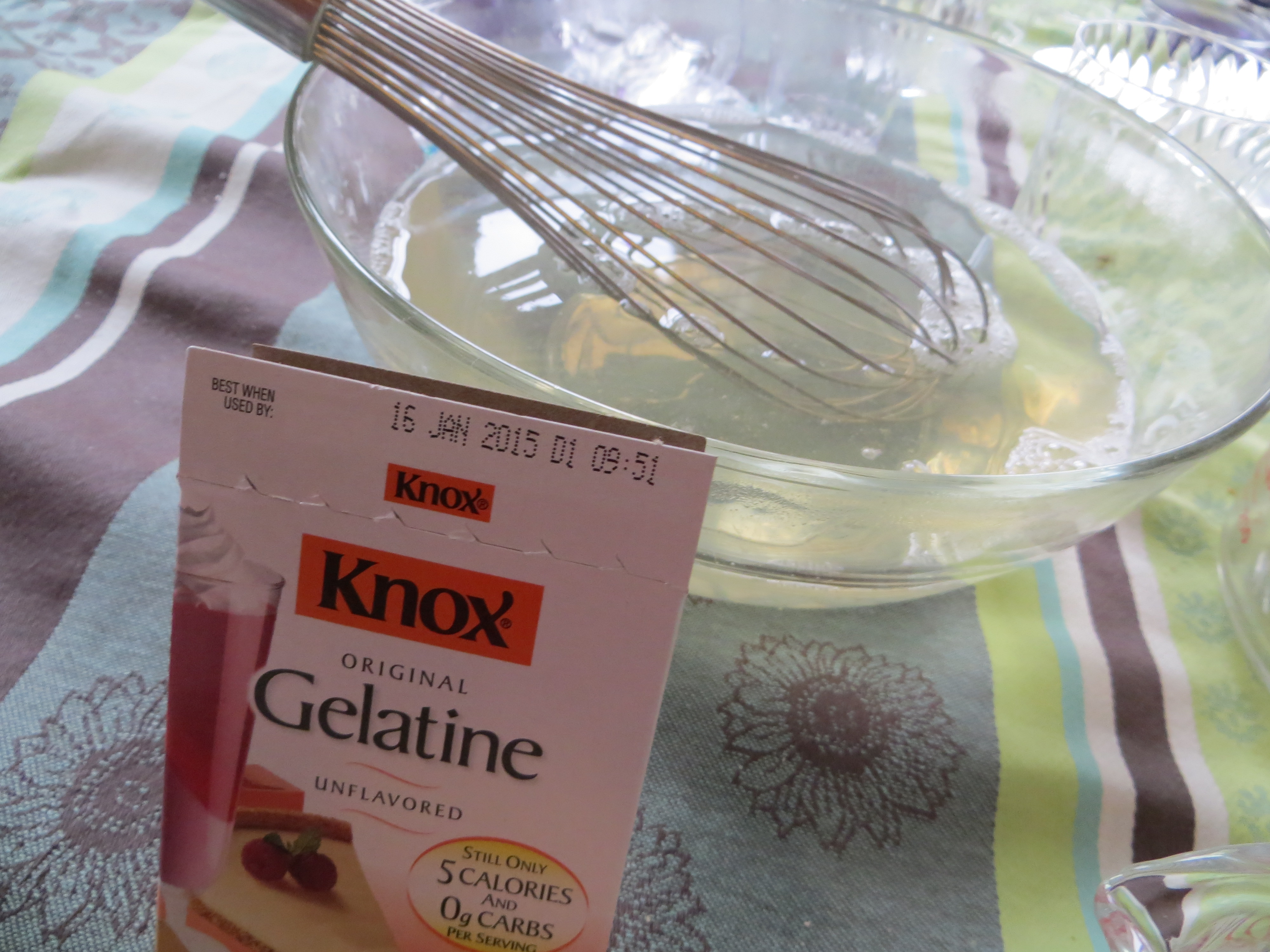
Add 4 packs of plain, unflavored gelatin (1 oz or 28 gm) to 4 cups of boiling water. Pour the liquid gelatin into petri dishes, cups, or tupperware and let it harden. Then, using a straw, poke a hole or two in the gelatin, removing the plug so that you have a hole in the jello about 1/2 inch deep. Add a drop of food coloring in the hole in the jello.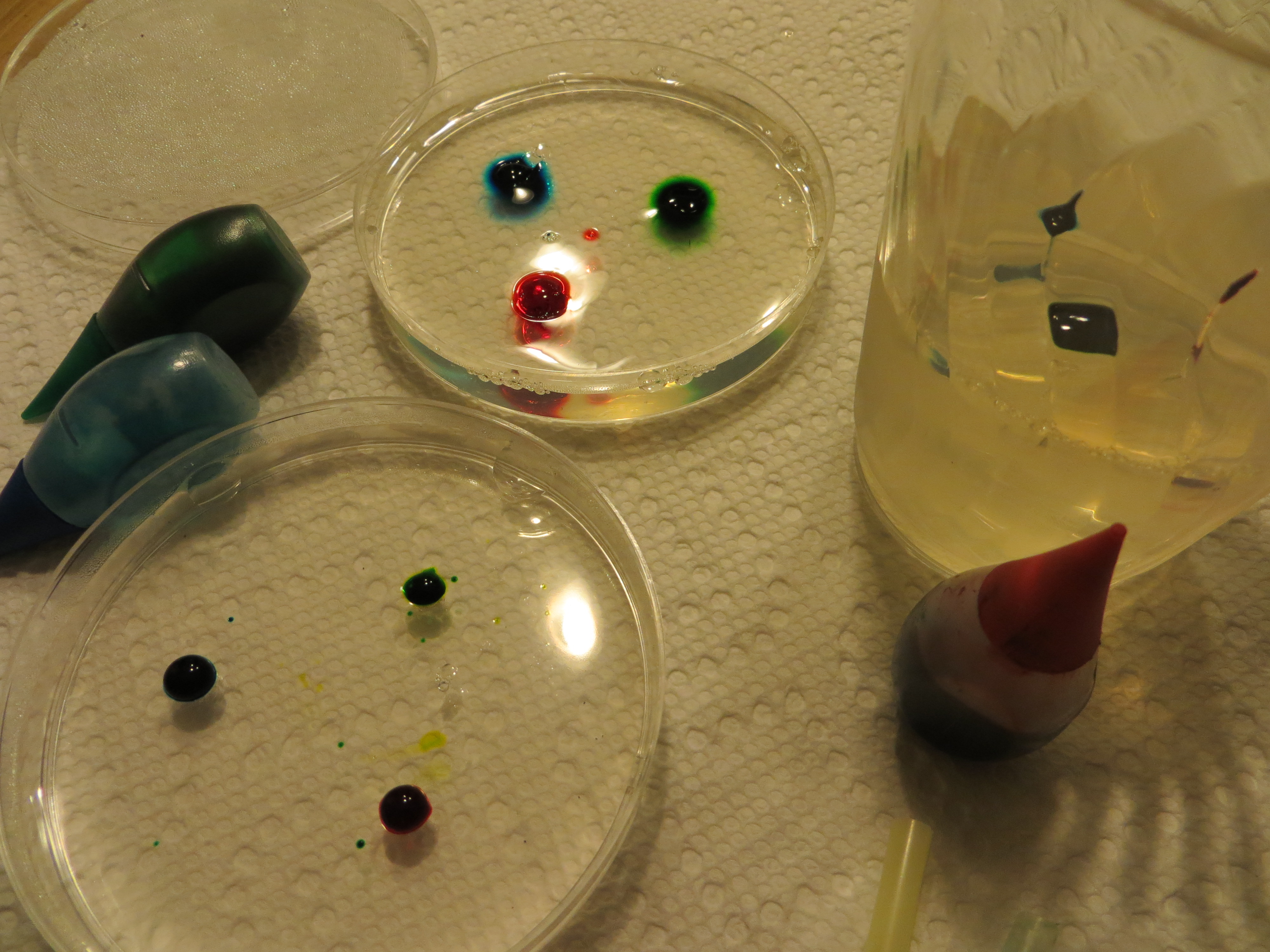

Every so often, measure the circle of food coloring as it diffuses into the jello around it. How many cm per hour is it diffusing? If you put one plate in the refrigerator and an identical one at room temperature, do they diffuse at the same rate? Why do you think you see more than one color for certain shades of food coloring? What else could you try?
Here’s a post on how to use this experiment to make sticky window decorations: https://kitchenpantryscientist.com/?p=4489
We made plates and did the same experiment using 2 cups of red cabbage juice, 2 cups of water and 4 packs of gelatin to see how fast a few drops of vinegar or baking soda solution would diffuse (a pigment in red cabbage turns pink when exposed to acid, and blue/green when exposed to a base!)
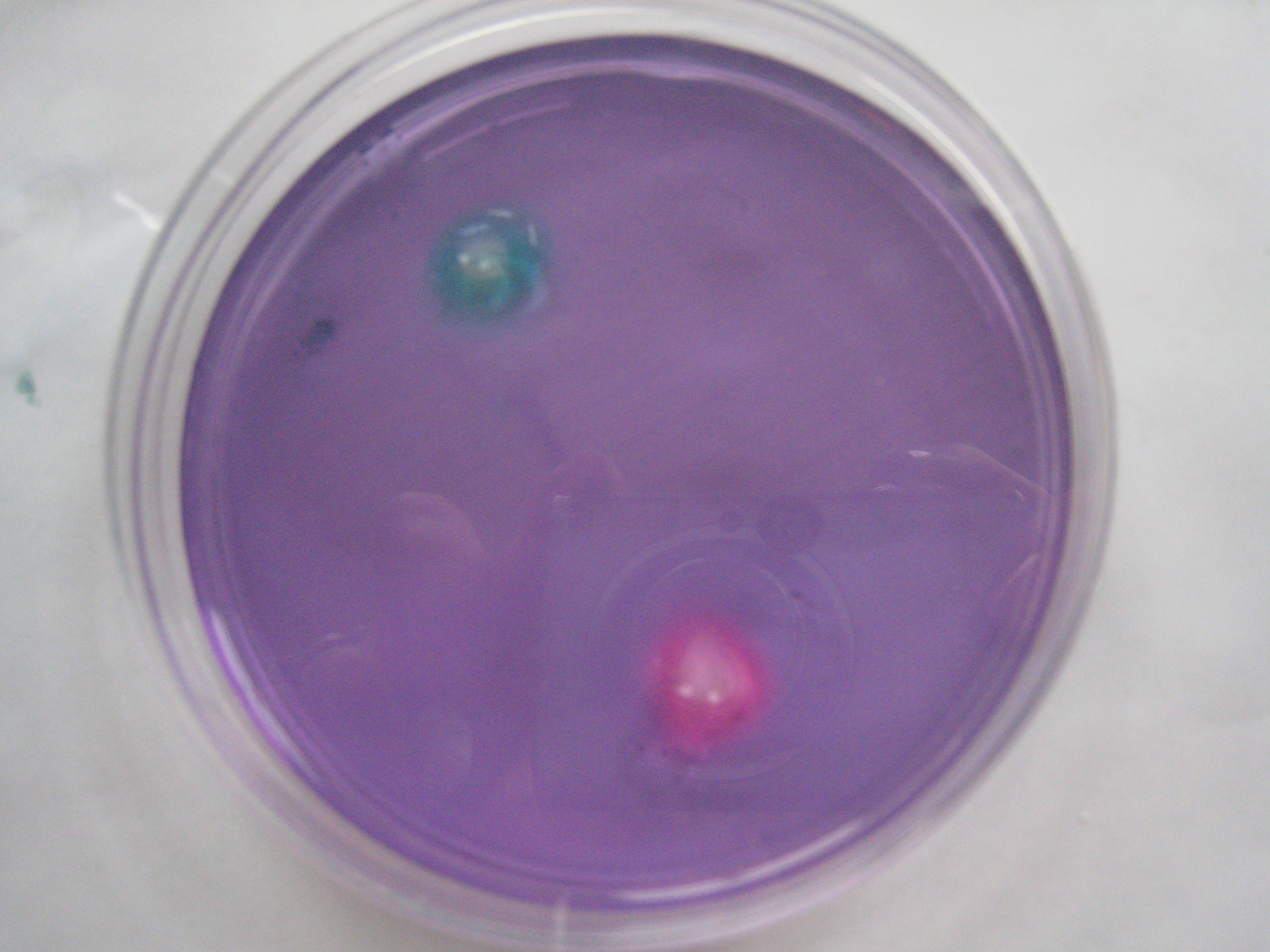
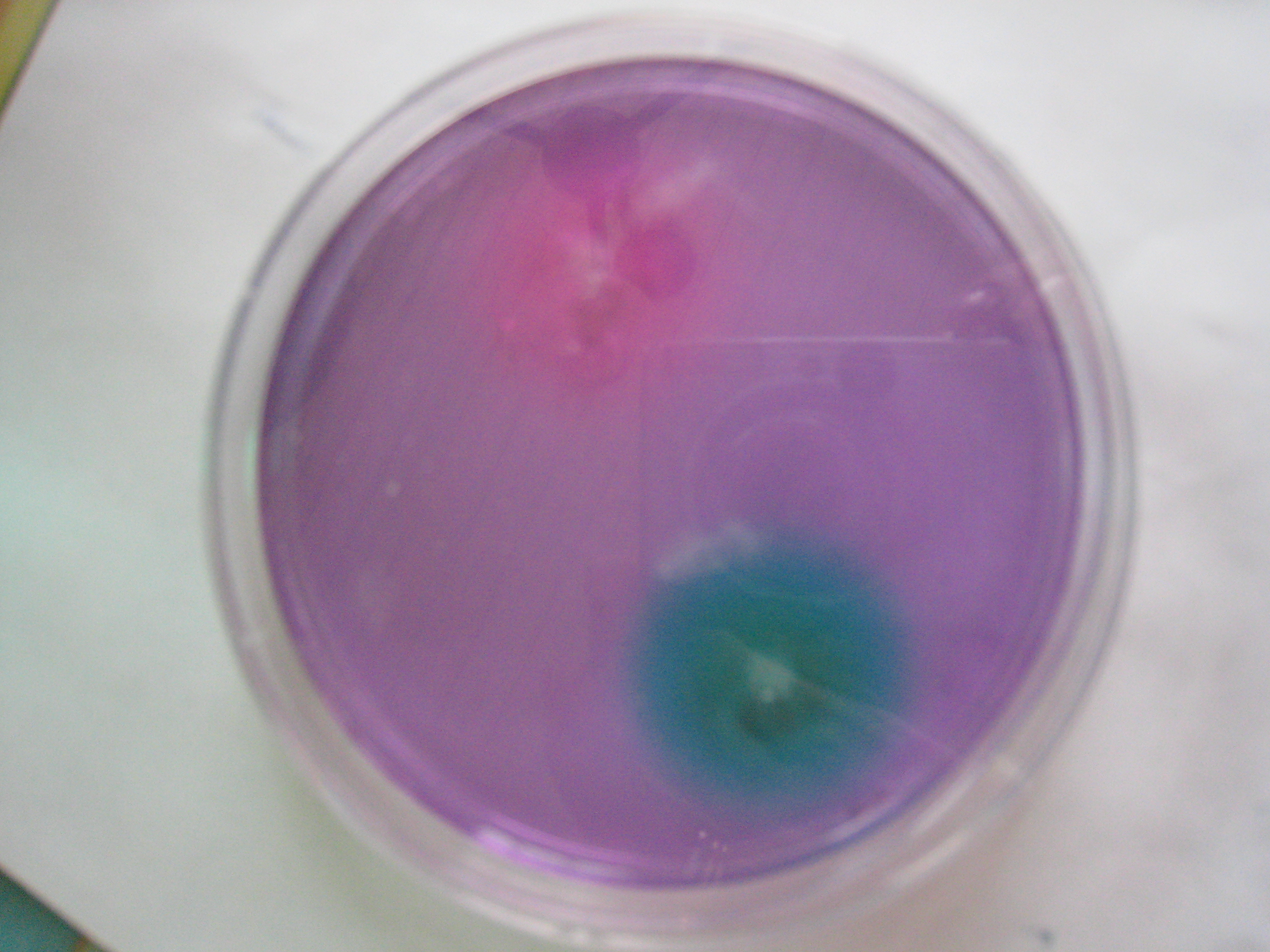
 You can see the pink circle from the vinegar and the green one from the baking soda solution.
It’s also fun to experiment with the diffusion of substances across a membrane, like a paper towel. This is called osmosis. Membranes like the ones around your cells are selectively permeable and let water and oxygen in and out, but keep other, larger molecules from freely entering and exiting your cells.
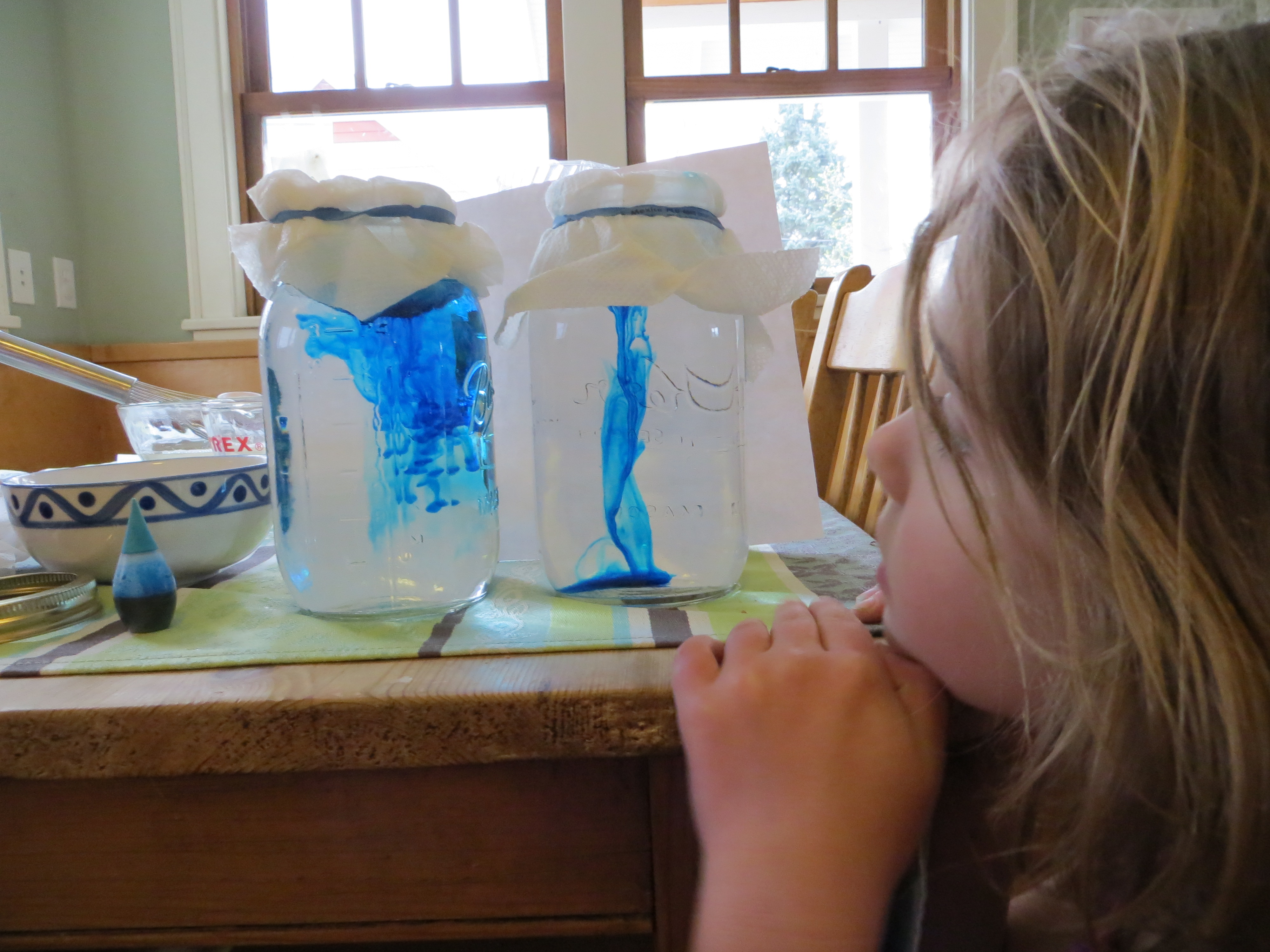
For this experiment, you’ll need a jar (or two), paper towels, rubber bands and food coloring. Fill a jar with water and secure a paper towel in the jar’s mouth (with a rubber band) so that it hangs down into the water, making a water-filled chamber that you can add food coloring to. Put a few drops of food coloring into the chamber and see what happens.
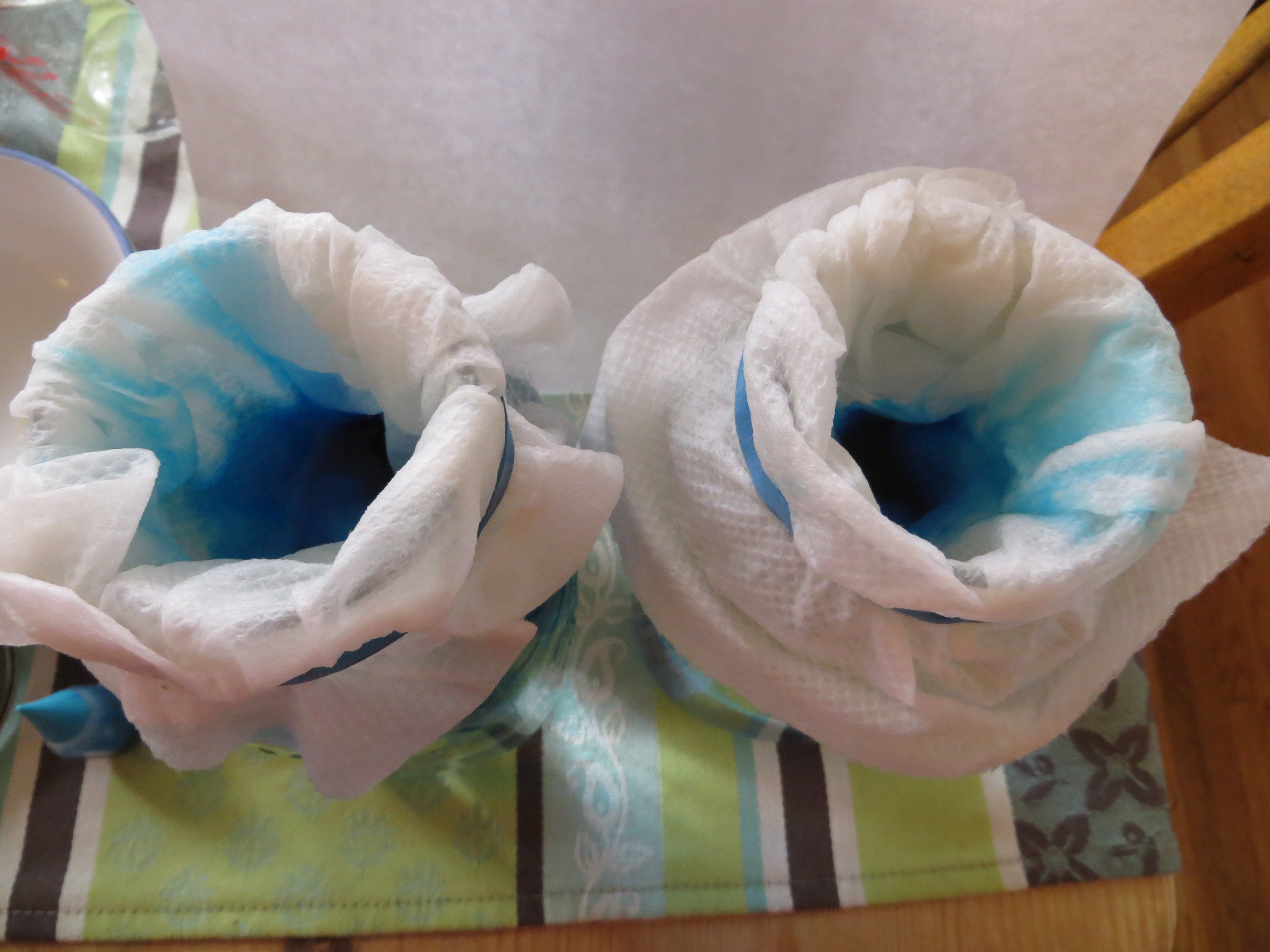
top “chambers” for food coloring

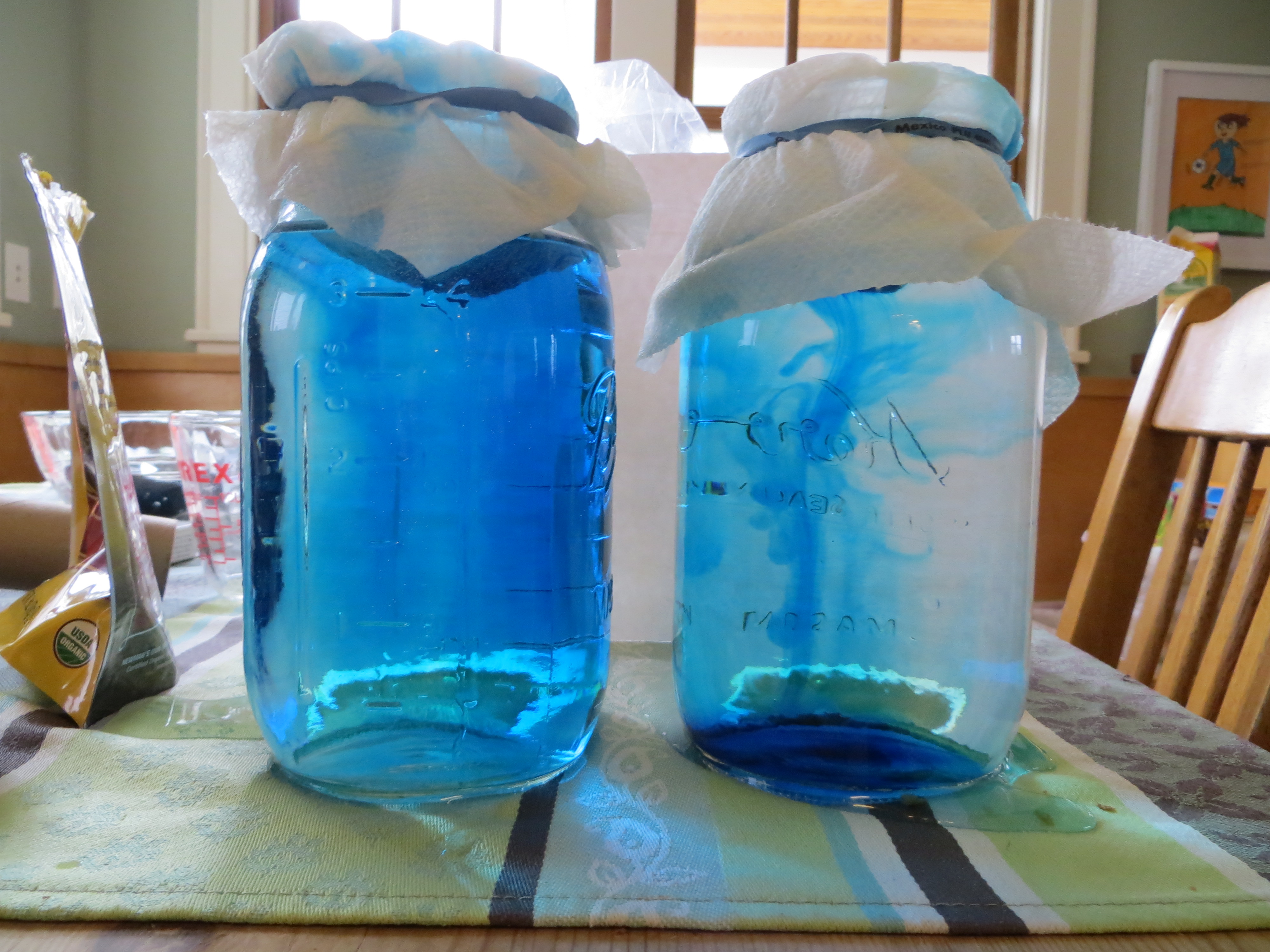
Are the food coloring molecules small enough to pass through the paper towel “membrane?” What happens if you put something bigger, like popcorn kernels in the chamber? Can they pass through the small pores in the paper towel?
Do the same experiment in side-by-side jars, but fill one with ice water and the other with hot water. Does this affect the rate of osmosis or how fast the food coloring molecules diffuse throughout the water?
Think about helium balloons. If you take identical balloons and fill one with helium and the other with air, the helium balloon will shrink much faster as the smaller helium atoms diffuse out more quickly than the larger oxygen molecules.
Lemon-painted Eggs
- by KitchenPantryScientist
 We’ve often used the water from boiling red cabbage to make Litumus (acid-indicator) paper, but last year, we used it to make egg dye! Simply follow the directions here to make your cabbage “juice” and put hard boiled eggs in the cabbage juice to dye them blue. Boil your eggs in the cabbage juice and refrigerate them in the juice overnight for the best color! The juice turns pink when you add an acid to it, so when your eggs are dry, you can paint pink designs on them with lemon juice or vinegar using paintbrushes, toothpicks or Q-tips. You can also dissolve baking soda in water (which makes a base) to add more color to the eggs (greenish-blue which shows up when they dry.) Here’s a video of a demonstration I did on Kare11 news of this experiment.
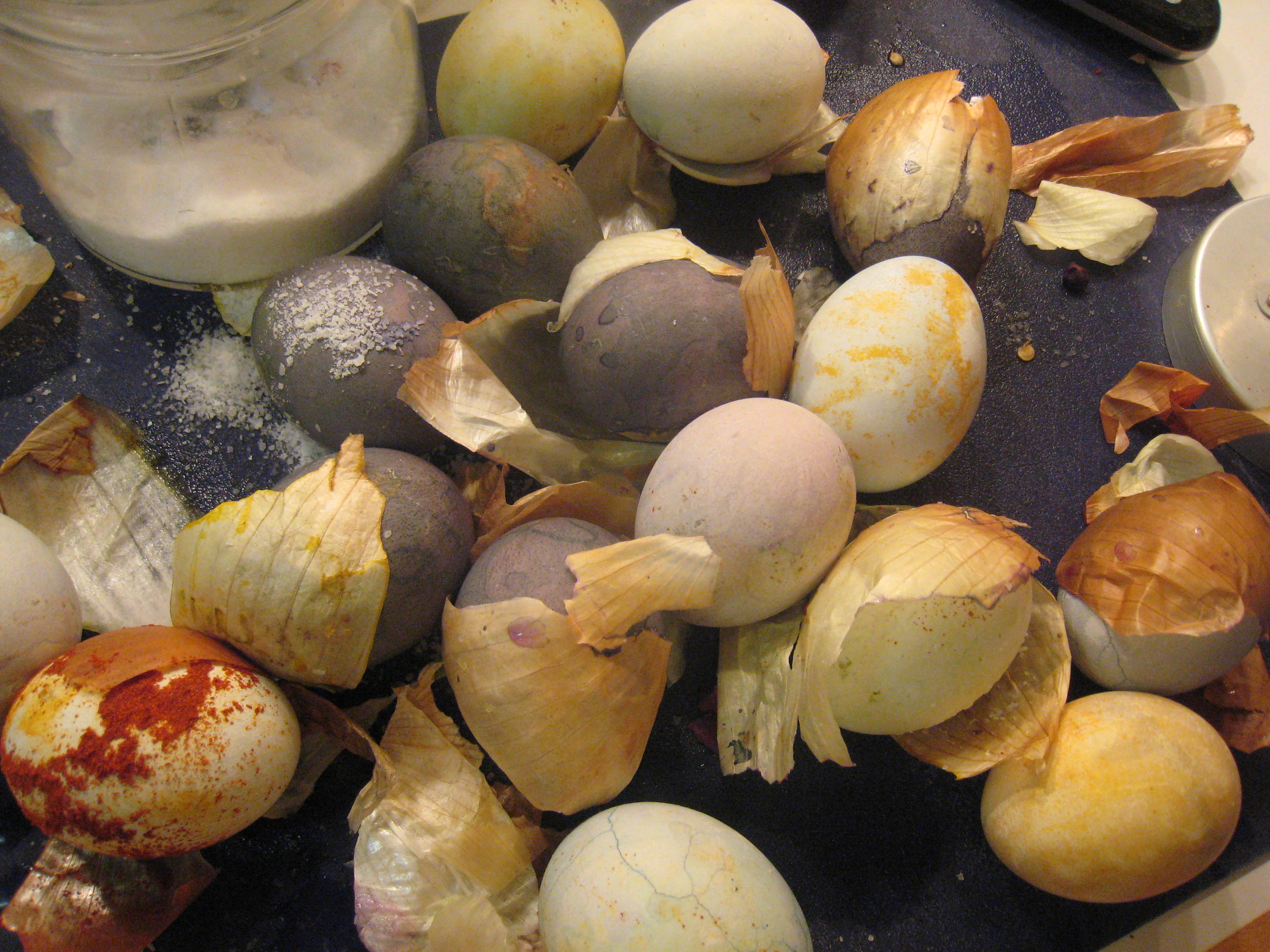
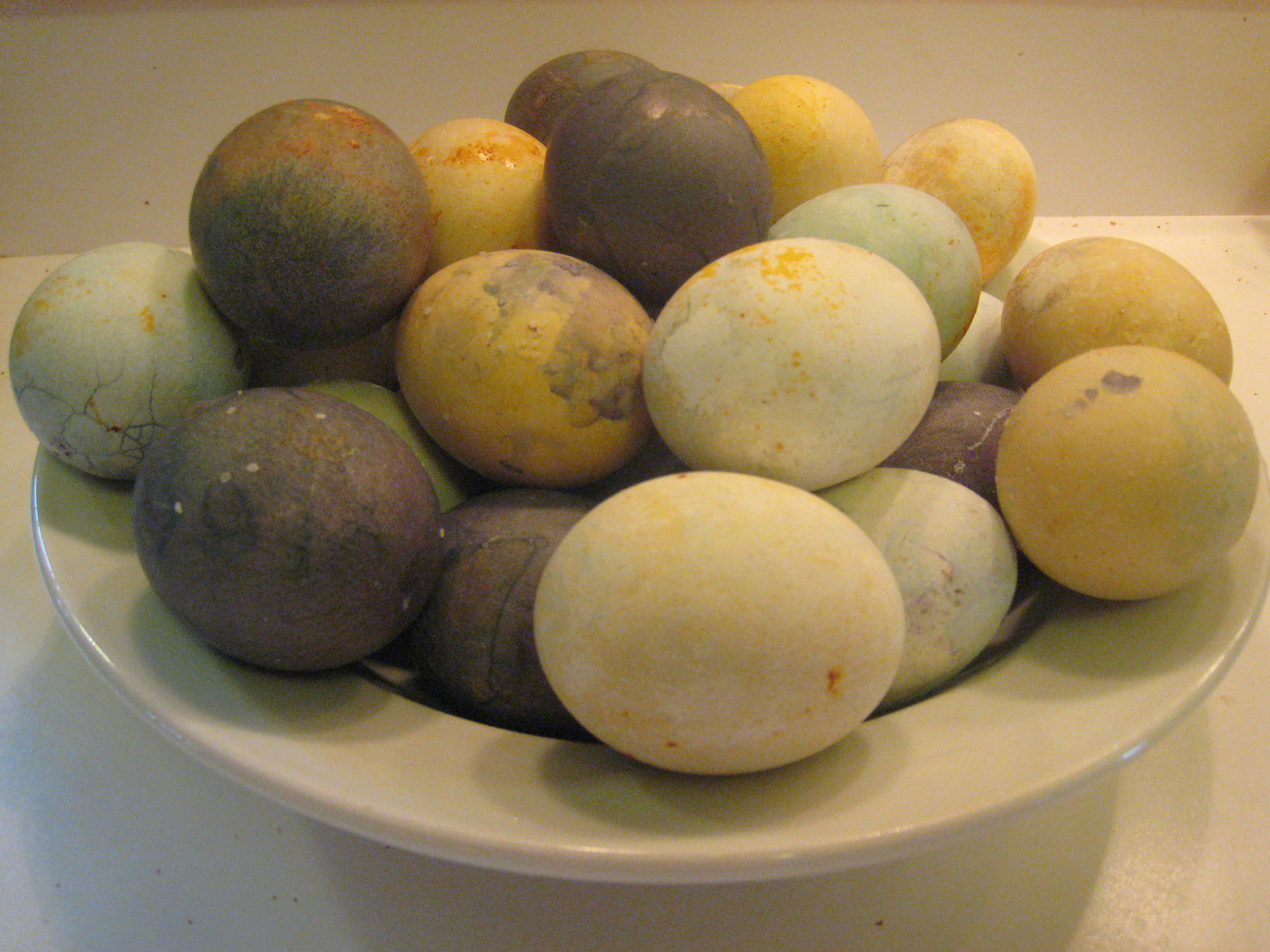
Try some other natural egg dyes! Boil colorful fruit, vegetables and spices with 4-8 cups water and a few Tbs. of white vinegar. When the water is boiling, add raw eggs and boil for 10 minutes. The pigment in the fruits and veggies will be absorbed by the egg’s porous surface as they cook. Let the eggs sit in the dye until cool. Then, wrap the wet eggs in onion skins or rub with paprika for yellow. We had the best luck with blueberries, curry and red cabbage. Experiment to see what makes the best colors! What worked best for you? Coffee? Tea? rhubarb? Don’t forget to eat your creations. Hard-boiled eggs make a great snack!
A Day at the Museum
- by KitchenPantryScientist
 There was no school yesterday, so we went on a field trip of our own to the Science Museum of Minnesota.
We started the day by being transported “Under the Sea” at the Omnitheater, watching sea lions frolic and giant sea turtles gobble jellyfish. (Did you know they close their eyes each time they take a bite, so they don’t get stung?) The kids loved “Real Pirates” and filled out activity sheets to win eyepatches. They especially liked playing dice and looking at the different coins in the Treasure Room!
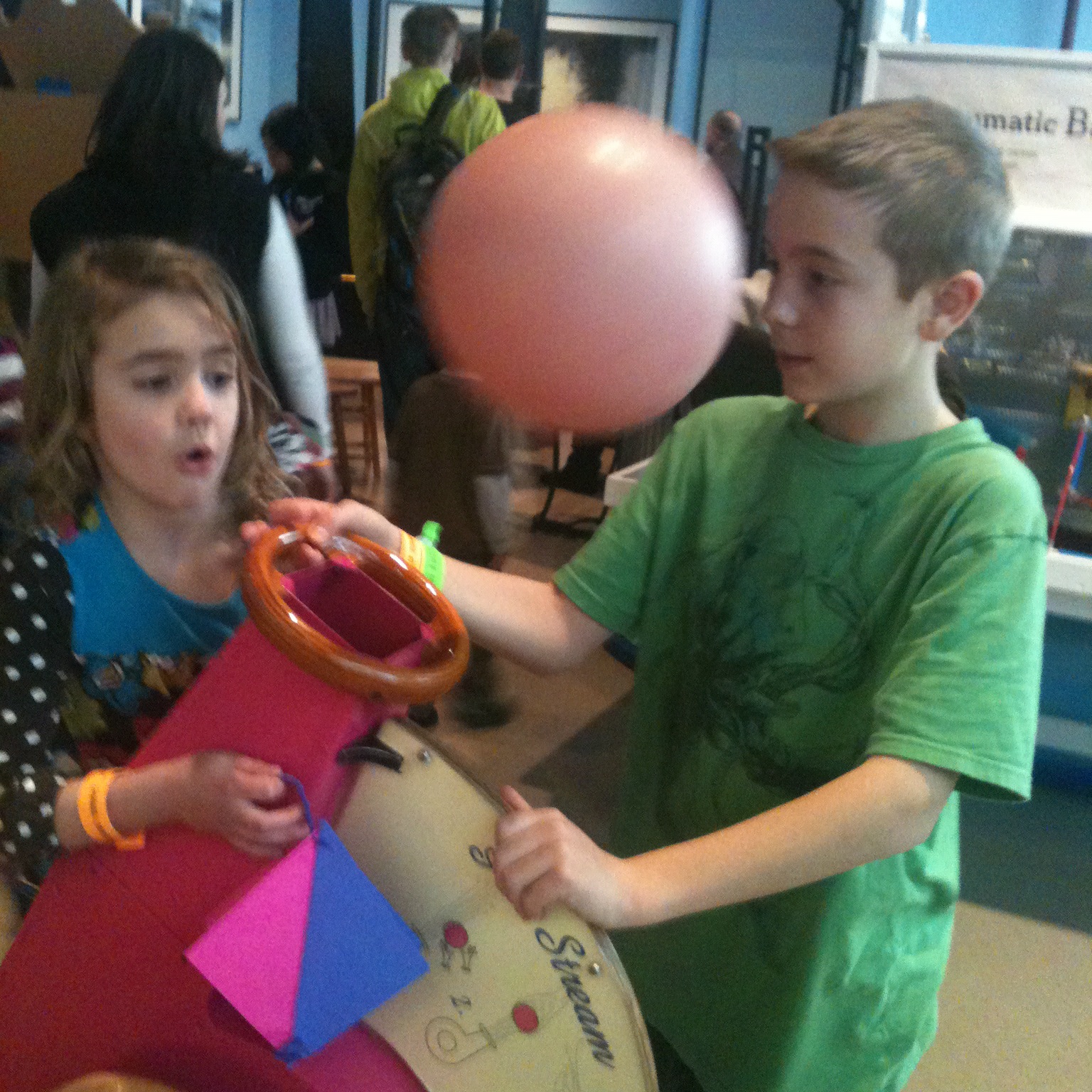
After lunch, they brought some fossils and flint they’d found in Kansas to the Collector’s Corner and then we spent the rest of the day playing at the museum!
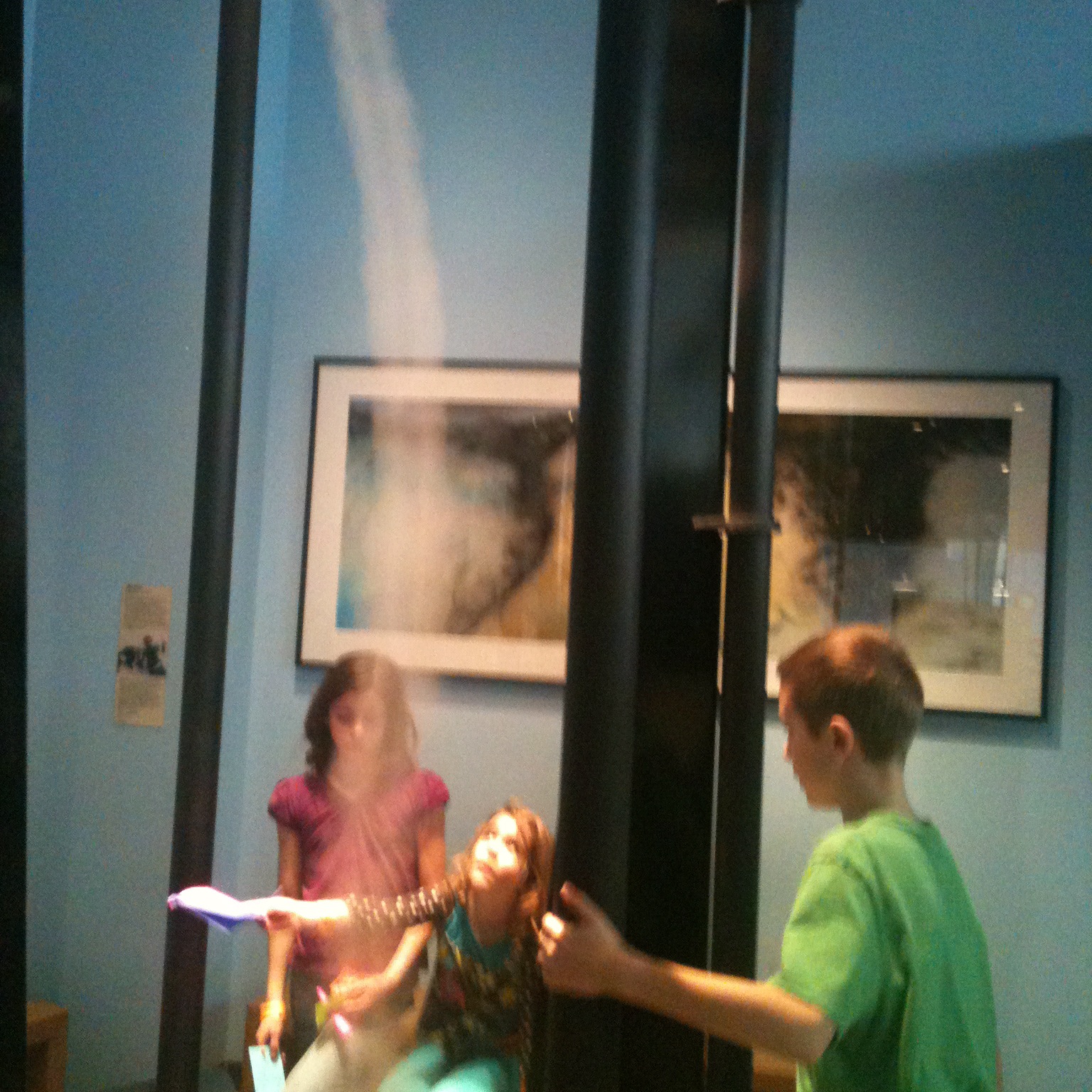
The new wind tunnels, where kids could fashion flying machines from paper, cups and pipe cleaners were a huge hit! I wonder if we could figure out how to make one in our kitchen. Hmmm.
Solar Storms and the Zombie Apocalypse
- by KitchenPantryScientist
My son came home from school the other day joking about a zombie apocalypse. Before that, it was the Mayan apocalypse. And now, he keeps hearing about all these “freaky” solar storms. He laughs, but I’m sure his 11-year-old imagination leaves plenty of room for worry.
I can’t kill the zombies lurking in his subconscience, but I can put his mind (and my own) at ease about the solar storms with this short NASA video that explains that we’re in a totally normal sun cycle and are protected by Earth’s atmosphere
The Science of Success- Mentors
- by KitchenPantryScientist
As I listened to their stories, I couldn’t stop the tears. They were teenagers now, but it was easy to imagine them as 5-year-olds, or 10-year-olds as I watched their awkward gestures, shy eyes and beautiful smiles. I thought of my own children.
These were kids with stories no one wants to hear. Some told of begging for food to feed their younger siblings while their parents, crippled by addiction, traded food stamps for drugs. They told of families struggling with depression, homelessness, suicides, neglect, and abuse. They told stories no child should be telling.
It would be nice to think that they were unusual, but they weren’t. These kids represented some of the 15% of Minnesota kids who live in poverty. And poverty is often associated with conditions that put children’s health and development, education and future job success at risk. It’s a vicious, downward cycle. (And for the record, three-fourths of Minnesota families in poverty have at least one parent in the workforce.)
The kids I heard speaking about their hardships were special though. Although they represented poor, at-risk kids in Minnesota, they had broken the cycle and overcome the hardships of poverty and broken families to succeed in school. They were finalists for the Children’s Defense Fund of Minnesota‘s “Beat the Odds” scholarship. They were moving forward, out of poverty.
And what did they have in common? Each of them had one person in their life who believed in them and told them that they could succeed. Many of them only had one person. One person. That was all it took.
For many, it was a teacher or counselor. For others, it was a sibling, parent or grandparent. But those individuals, those mentors, saved the lives of each of these children in many ways, allowing them to move forward into education, propelling them forward to lead richer lives where day to day existance isn’t a struggle.
Organizations like Children’s Defense Fund help these kids in many ways, fighting for higher minimum wages for the working poor, researching maternal depression and helping poor families get the help they need.
What can you do to help?
Find a way to be a mentor. Many communities organizations and churches have reading-buddy programs and a wealth of other opportunities to help at-risk kids succeed. Tell a child (other than your own) that you believe in them. Tell them that they can be what they want to be. They can do what they want to do. They can succeed.
You might save a life, and in doing so, help build a brighter future for all of us.
Real Pirates and How to Make a Compass
- by KitchenPantryScientist
Last week at the Real Pirates exhibit at the Science Museum of Minnesota, I walked below deck on a mock pirate ship, hoisted a pirate flag (Jolly Roger), touched real pirate treasure and played dice with pirates. The bell of the Whydah, a 300-ton pirate ship greeted us, illuminated by lighting and suspended in a huge tank of water. I could almost imagine it spinning and tumbling to the bottom of the sea off the Massachusetts coast. 146 people aboard the ship drowned when The Wyhdah went down.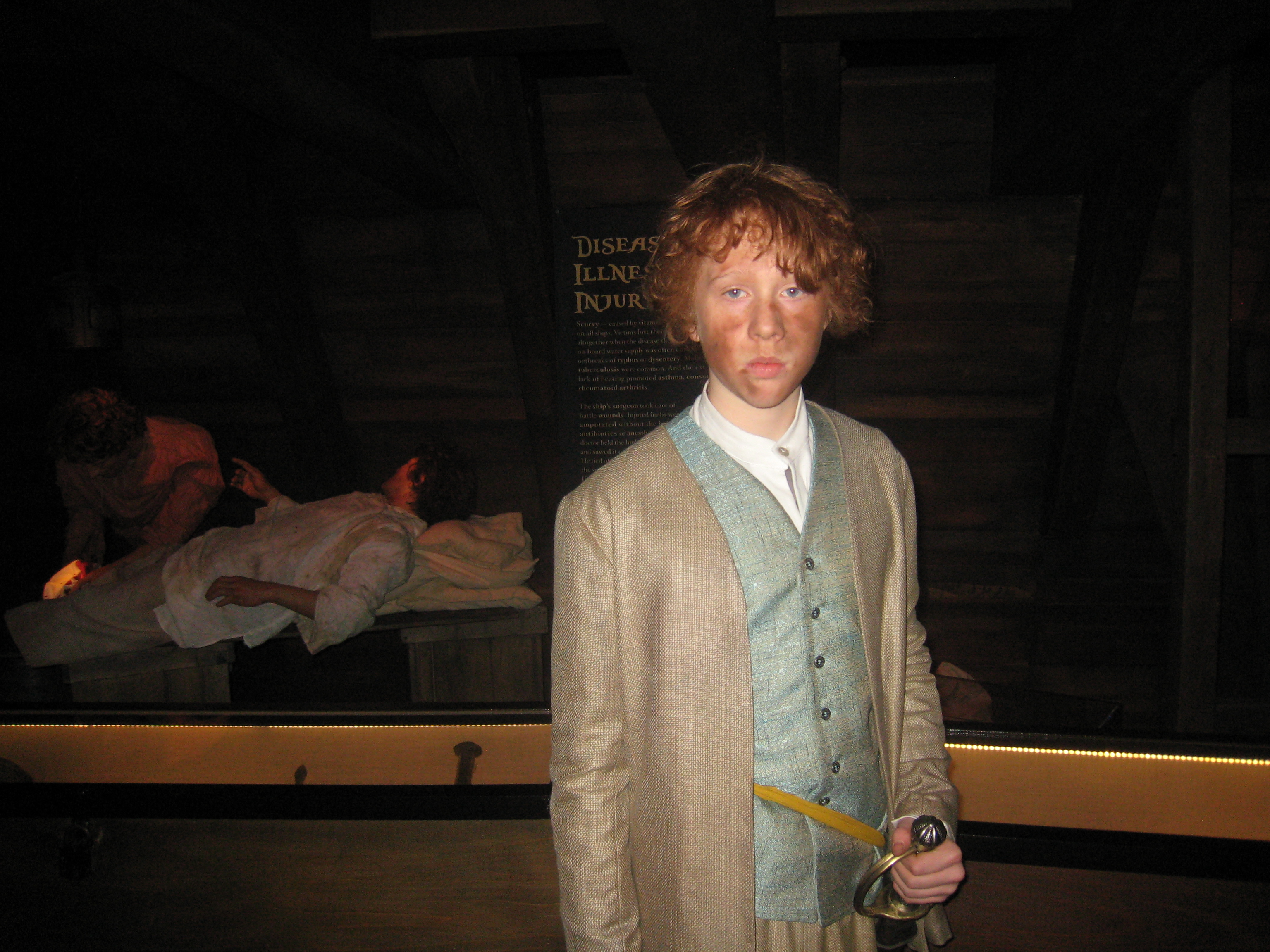
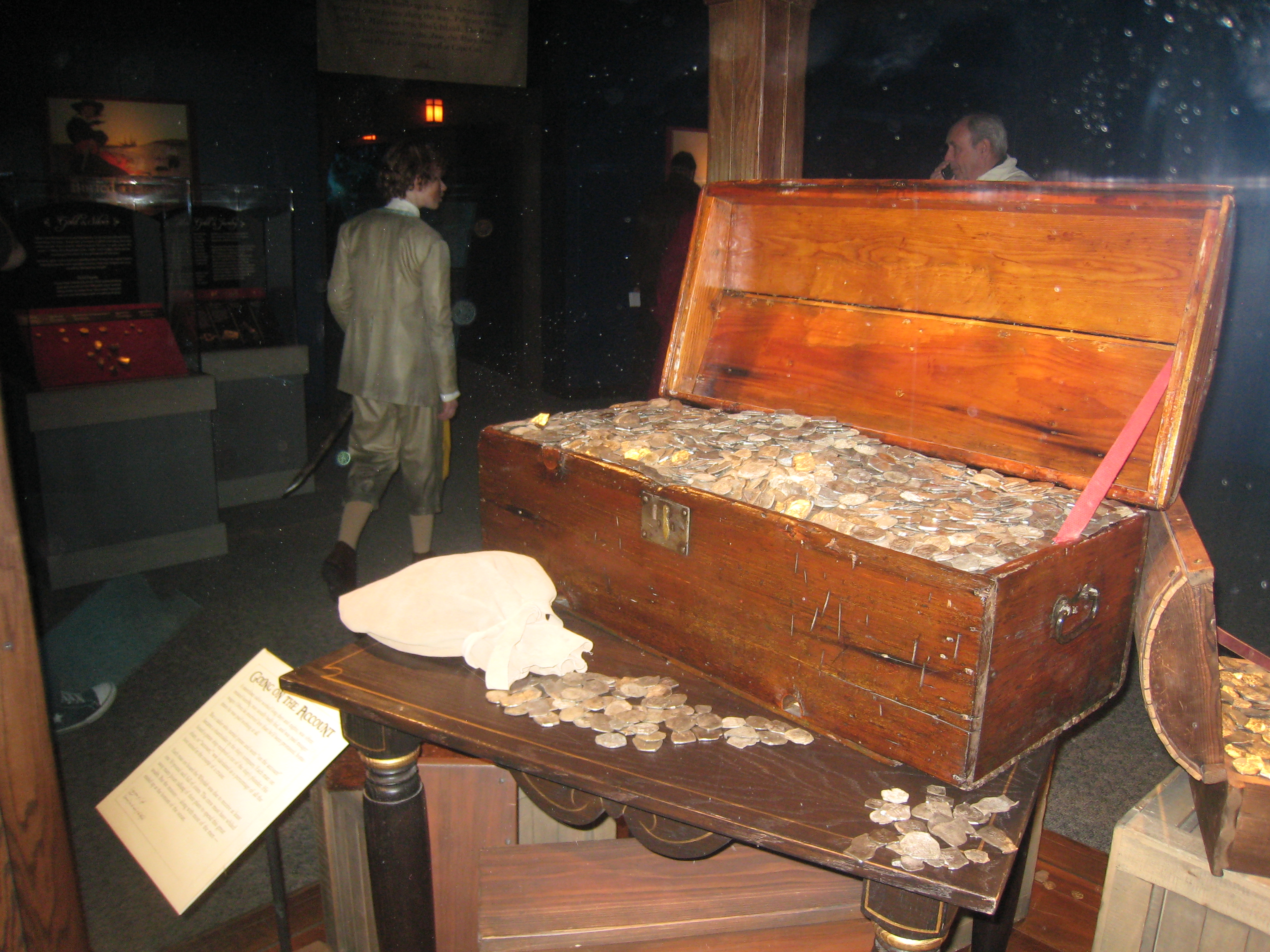
I was lucky enought to meet the treasure hunter-turned-historian Barry Cifford who discovered the wreck of the Whydah. He explained to us that pirate ships were true democracies, where crew mates were equal, no matter their background, age, race or religion. As a result ,many rushed to be pirates- whether they had escaped slavery, unjust society, or were just trying to make their fortune. The captain of the Whydah, Sam Bellamy, needed money to marry the woman he loved. There was even a 10-year old boy named John King aboard the Whydah when she went down…he left his mother to join the pirates. (My 11-year old claims he’d never do that.)
How did pirates navigate their way around the deep blue ocean well enough to ever utter the words “Land Ahoy?” In addition to maps and the stars, they used tools like the ones I saw from the Whydah: sounding weights to determine sea depth and ring dials to tell time. They also used compasses, simple tools for determining which direction North was, even in thick fog. A compass is an instrument containing a magnetized pointer that shows the direction of magnetic north, and you can easily make one with a needle, a magnet and a piece of cork or Styrofoam and a glass bowl (or pie plate) containing a few inches of water.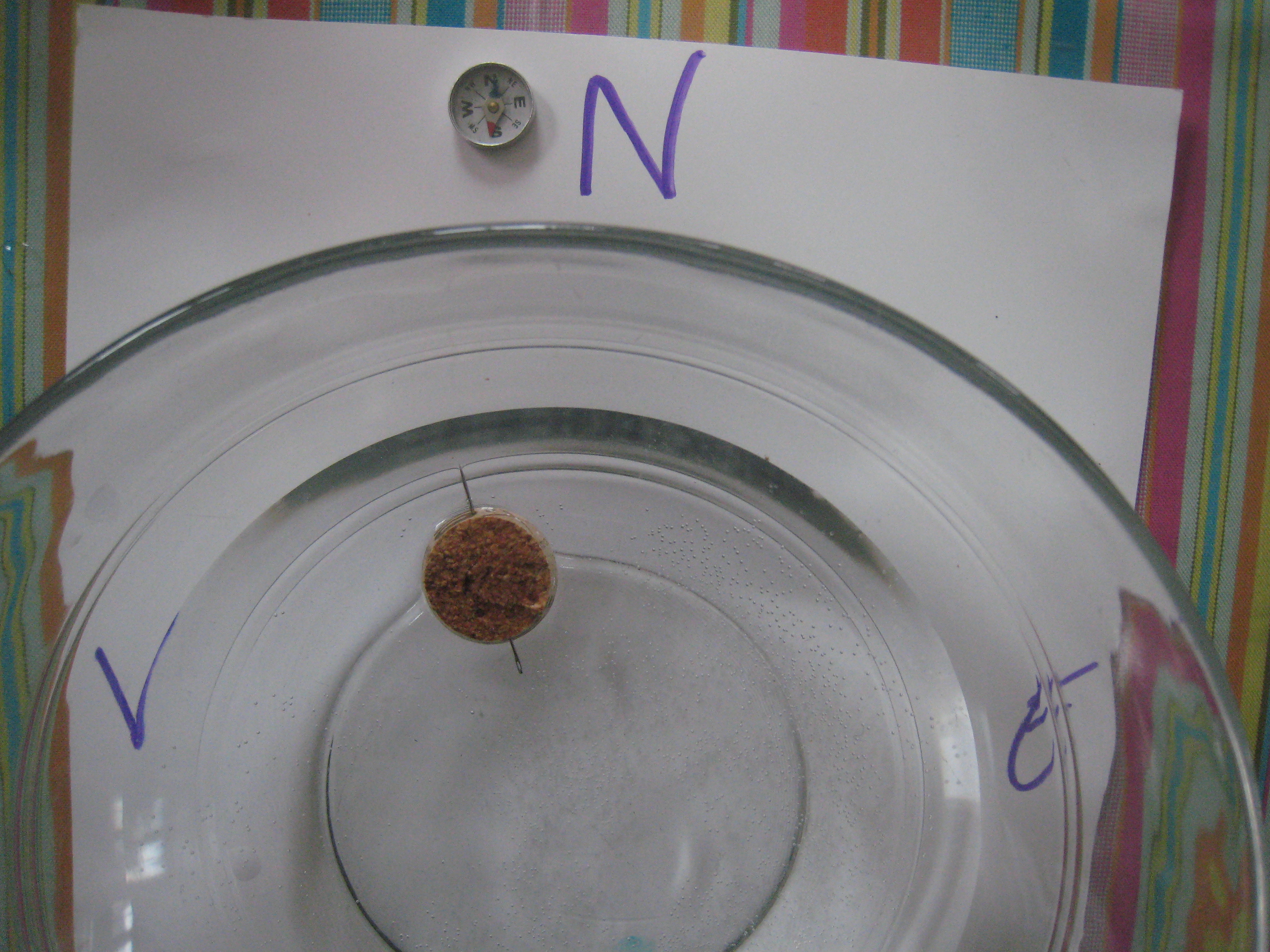 Cut a slice of cork, maybe 1/2 inch thick) with a bread knife (see photo.) Then, magnify the metal in your needle by stroking it from one end to another with a magnet about ten times. (Go the same direction each time.) Push your needle through the cork or Styrofoam and gently set it in the bowl of water. The needle, which you have turned into a magnet, will line up with Earth’s magnetic field, which runs from the South Pole to the North Pole. It should point North and South if you magnetized it correctly!
Target Shares Kitchen Pantry Science
- by KitchenPantryScientist
Since my goal is to get kids doing science, I was thrilled when Target asked me to do a guest post for abullseyeview.com about three easy experiments you can do with a homemade science kit!
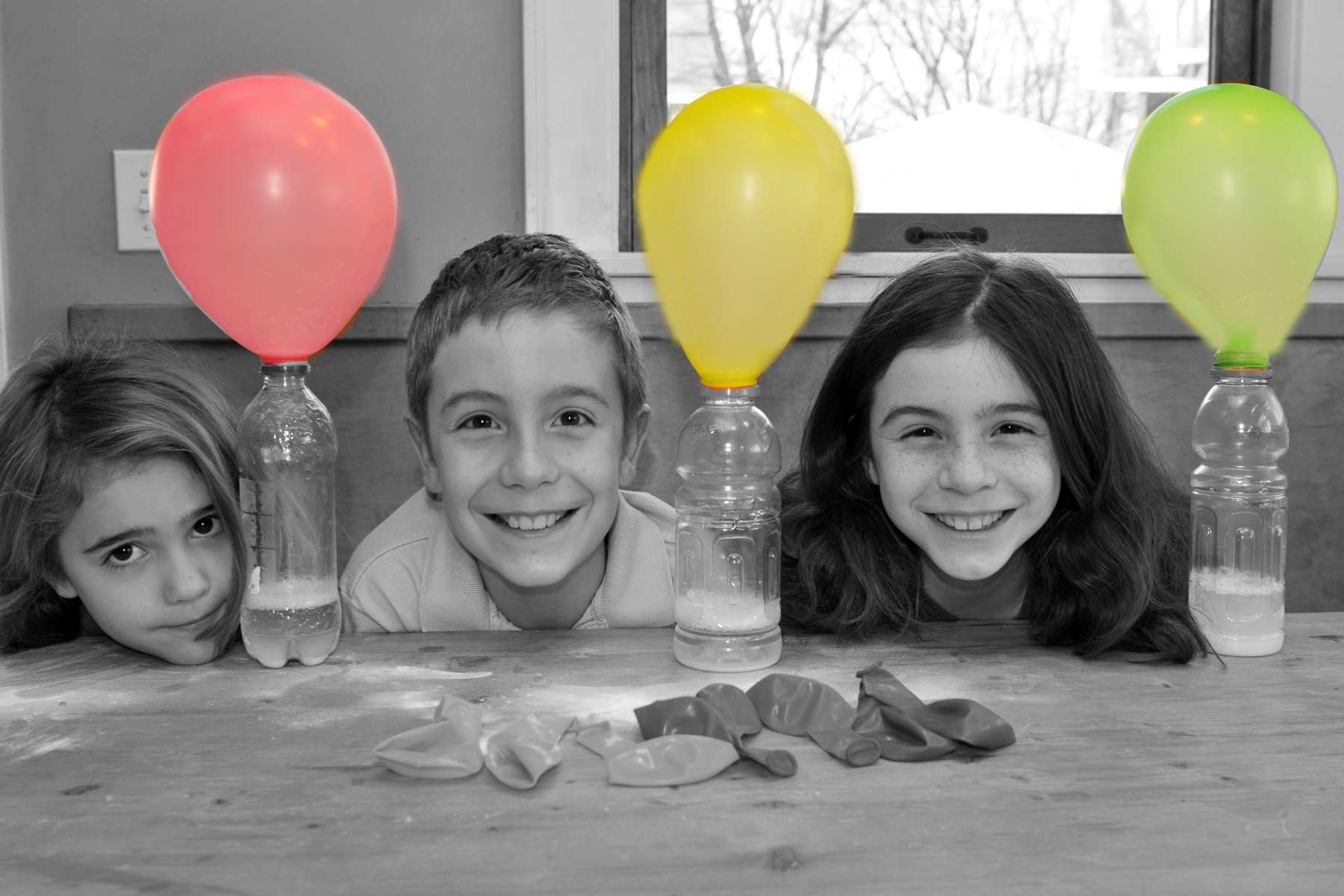
Check it out here.
Kitchen Table DNA Extraction
- by KitchenPantryScientist
DNA, or deoxyribonucleic acid, contains all of the information needed to make every protein in a living thing and is sometimes called the “blueprint of life.”
This morning, on Kare11 Sunrise news, the kids and I showed viewers how easy it is to extract DNA from strawberries.
In higher organisms like plants and animals, DNA is stored in a compartment called a nucleus where the long, string-like DNA is tightly coiled. To separate DNA from the organism that contains it, you have to break the cells apart (lysis), filter out the big pieces of cell parts and collect the remaining liquid, or supernatent, and add chemicals like salt and alcohol to separate (precipitate) the DNA from the rest of the supernatent.
To extract DNA from strawberries at your own kitchen table, you’ll need: 3 strawberries, measuring spoons, 2 one or two-cup pyrex measuring cups, a cone-shaped coffee filter, a plastic zip-lock bag, small clear plastic or glass cups, laundry detergent (liquid or powdered), ice cubes, 2 big bowls, a timer, salt and ice-cold rubbing alcohol. *Always supervise children around cutting tools and alcohol.
Put the alcohol in the freezer at least an hour before you start the experiment so it gets cold enough to precipitate DNA. Make sure the bottle is well-labeled and you remove it when you are done since rubbing alcohol is poisonous if it is consumed by accident.
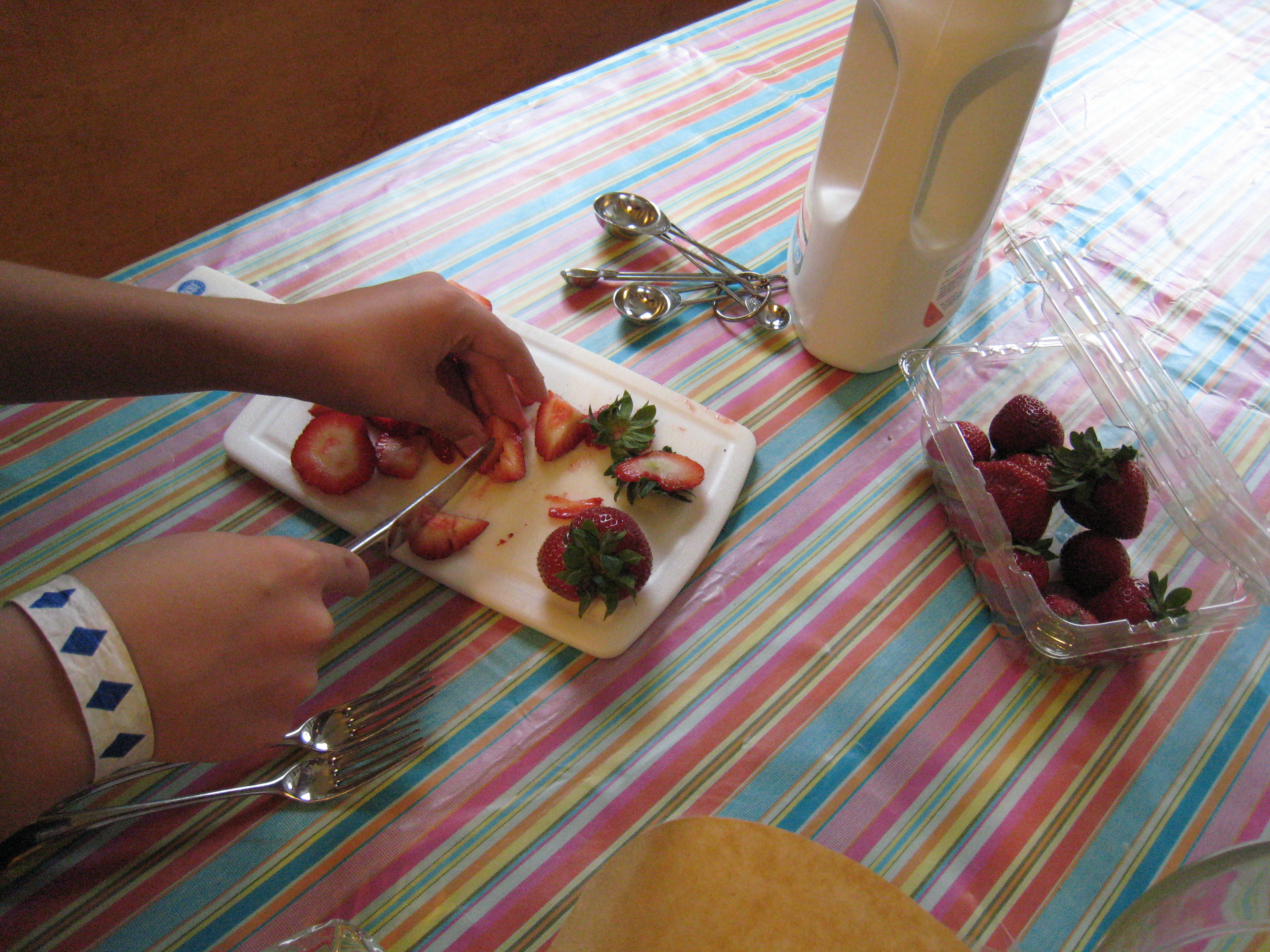
Cut strawberries into small pieces.
First, cut the strawberries into small pieces using a butter knife. Put the pieces in one of the pyrex measuring cups and mash them up well with a fork until you can’t see chunks any more.

Mix mashed strawberries with detergent and 1/2 cup water.
Add a teaspoon of liquid or solid detergent to 1/2 cup of warm tap water, mix and pour this soapy mix over the strawberries. Fill one of the big bowls about half way with hot tap water (as hot as it comes from the faucet) and set the pyrex cup containing strawberries inside the bowl of warm water. Mix well with your fork. The detergent and warm temperature will start lysing (breaking up) the strawberry cells and proteins called enzymes will start chewing up cell parts, releasing the DNA from the nucleus. Wait 12 minutes, stirring the strawberry mixture once in a while.
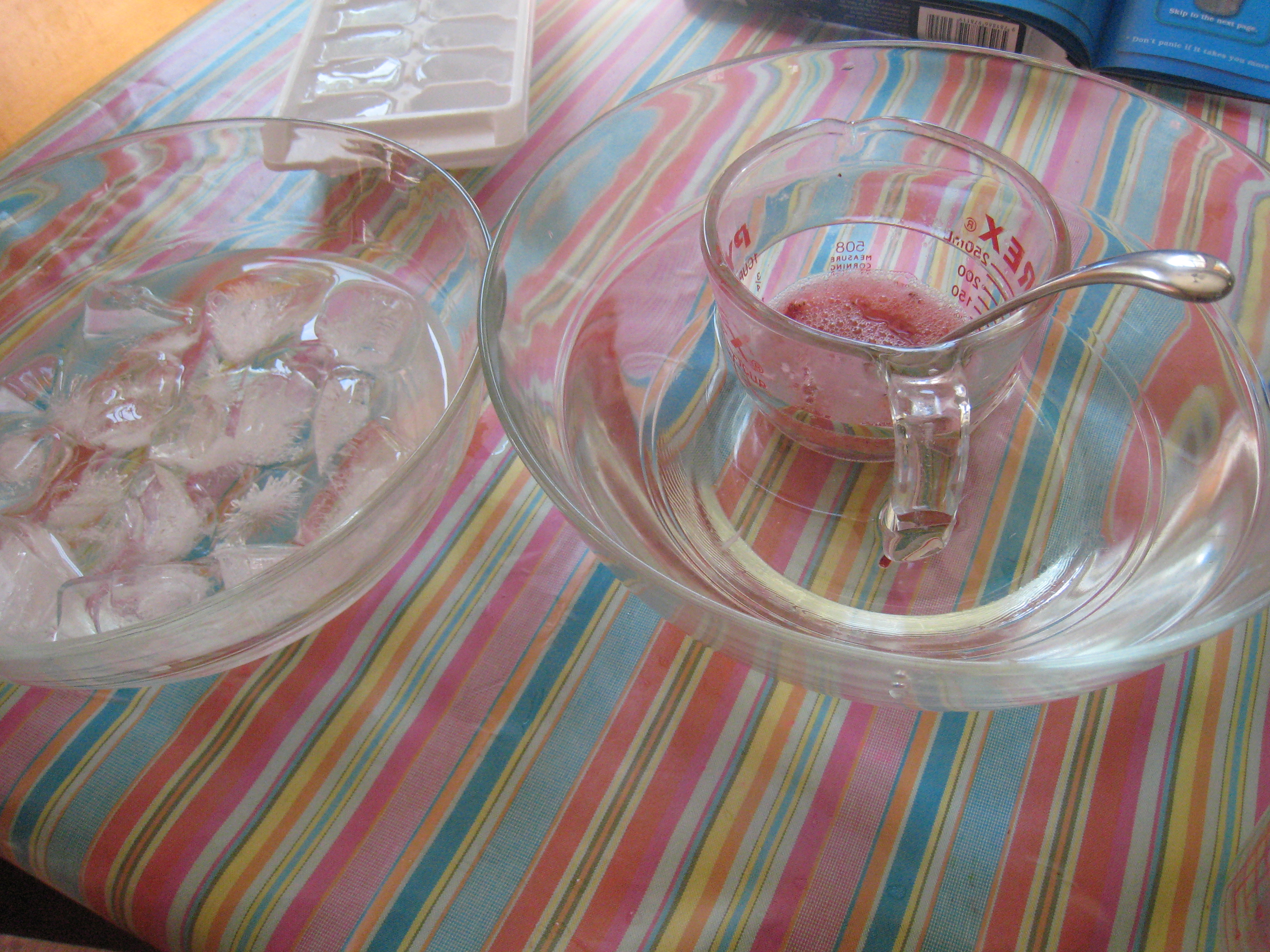
Set strawberry/detergent mix in warm water bath for 12 minutes, then ice bath for 5 minutes.
Fill the other bowl about halfway with water and lots of ice cubes to make an “ice bath”. When the 12 minutes are up, set the cup containing the strawberry mixture into the ice bath for around 5 minutes, stirring once or twice. The cold temperature will slow the enzymes down so they don’t start chewing up the strawberry DNA.
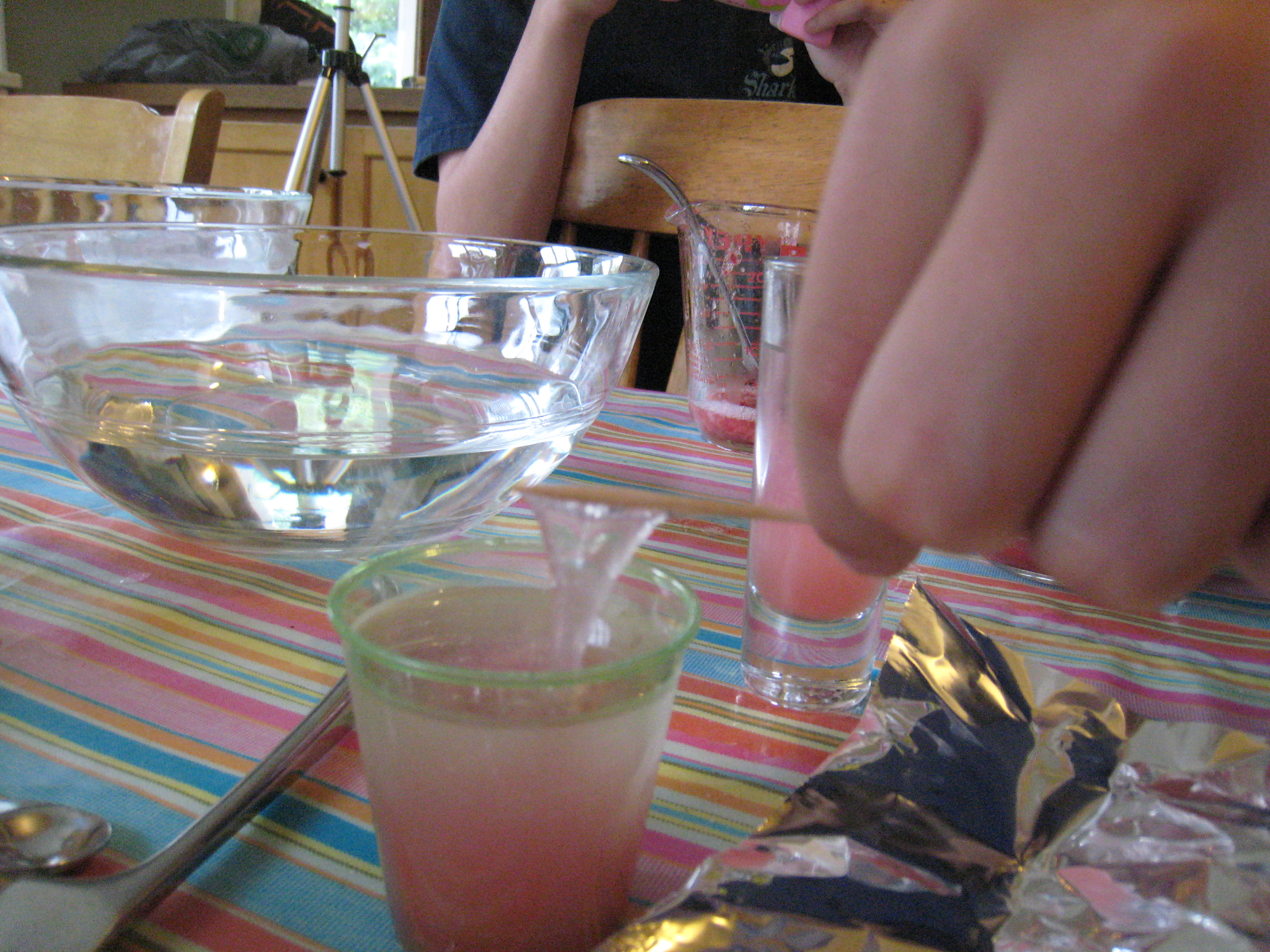
While you wait, cut a plastic bag into a funnel the same size as your coffee filter and clip off the corner of the plastic bag so liquid can flow out (see photo). Put the coffee filter inside your plastic bag funnel and set the whole thing in your other pyrex measuring cup (or a wide glass.)
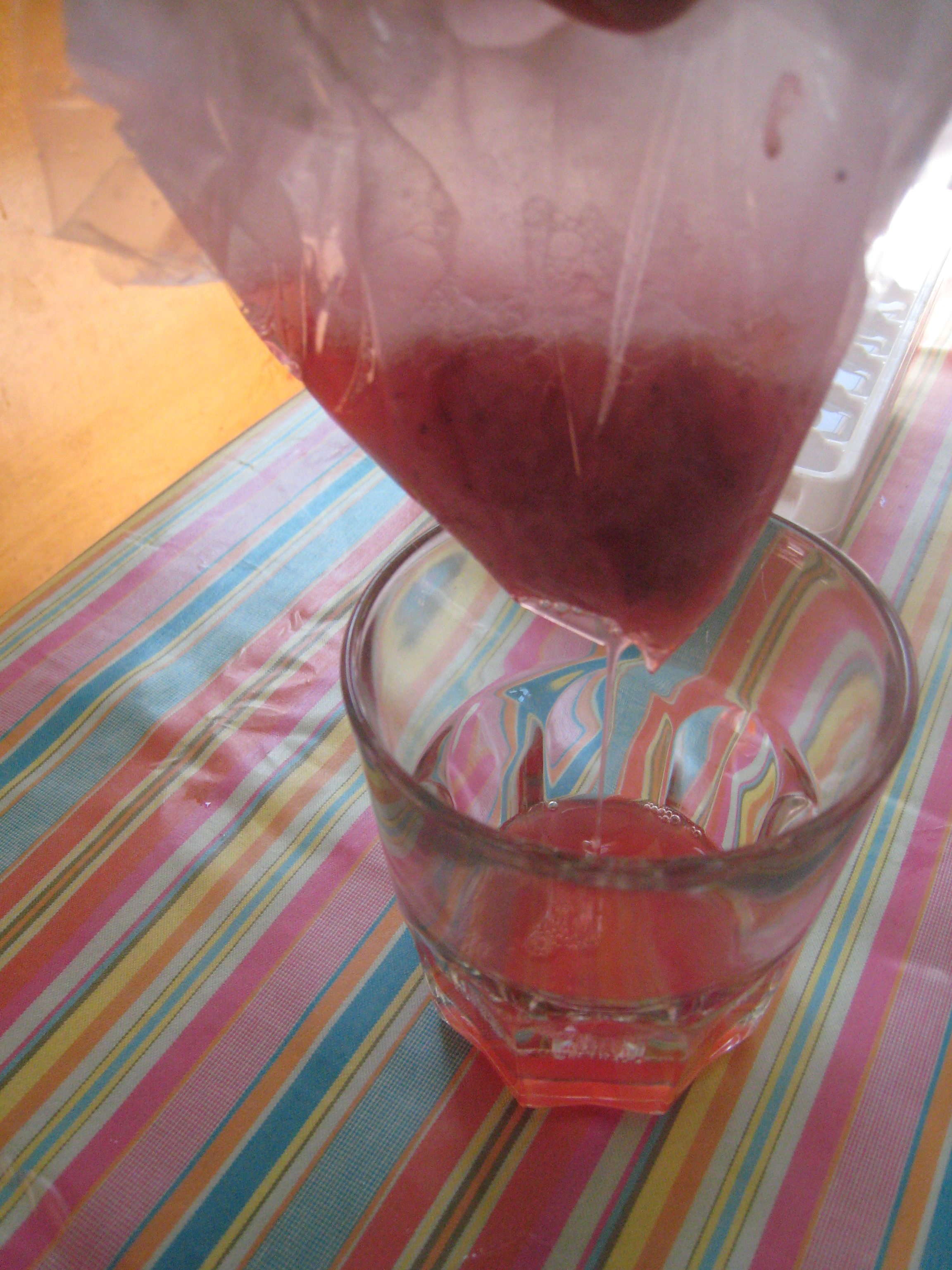
Put coffee filter inside plastic bag with tip cut off, pour strawberry mixture in and collect the supernatent.
When the 5 minutes are up, pour the strawberry solution into the filter/funnel and hold it while the strawberry gunk is filtered out and the supernatent containing the DNA flow through and into the cup below. If your filter gets clogged, use a spoon to carefully remove some of the strawberry gunk so more liquid can flow through. Don’t worry if you don’t collect every drop.
Now you get to precipitate the DNA! Pour some supernatent into your small, clear glass until it is about 1/3 full. Add about 1/4 teaspoon salt to the supernatant and mix it up well with a spoon or knife. Now, gently pour an equal volume (the same amount as your supernatent) of ice-cold alcohol into your supernatent. Do not mix it, but put your hand over the top of the glass and rock it gently. Set it down on the table and let it sit for a few minutes.
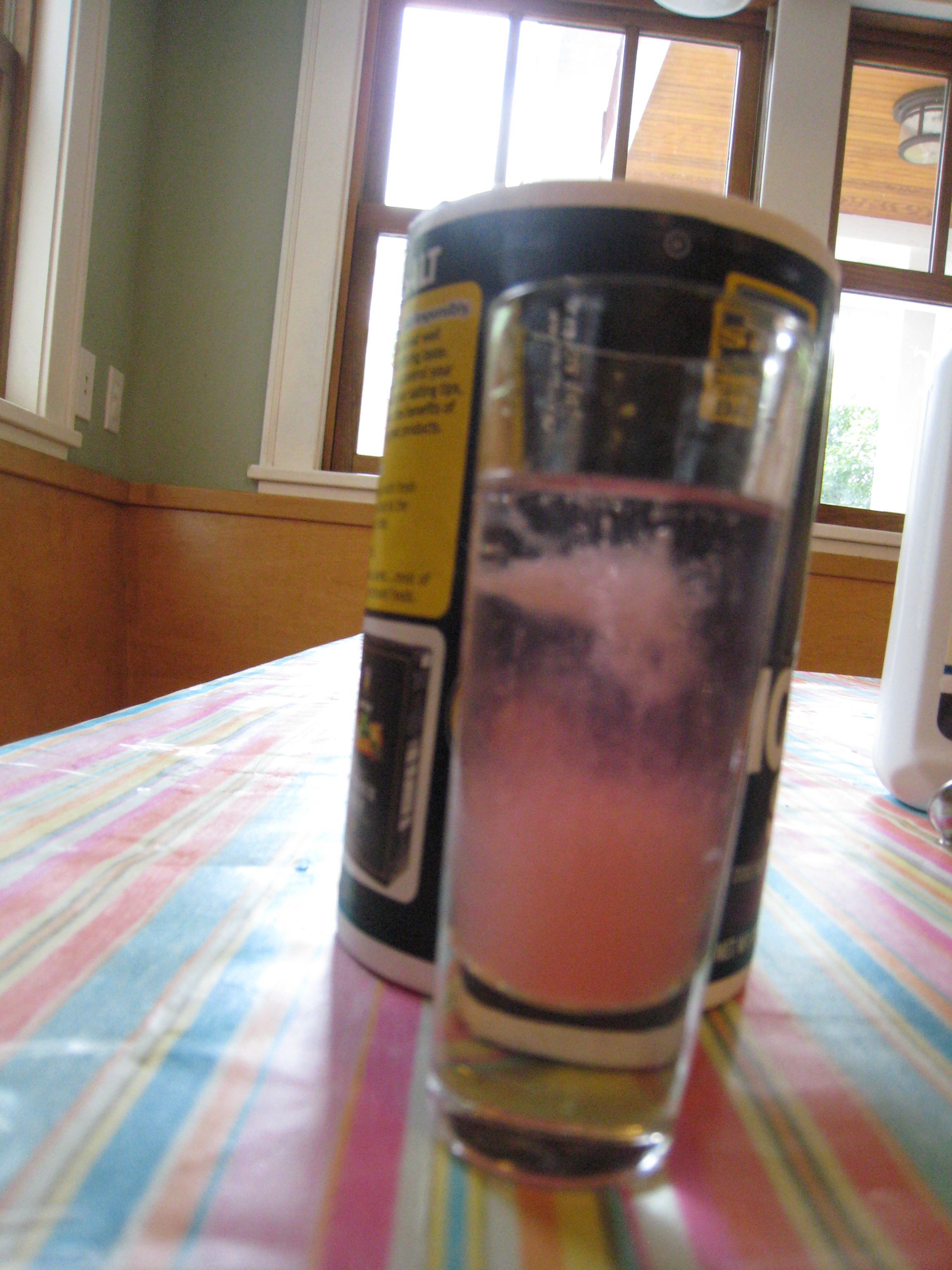
Cloudy white DNA precipitate will form near the top of your glass.
You should see a cloudy goo forming near the top of the liquid. It may look bubbly or slightly white. This is strawberry DNA.

Remove DNA with a toothpick, stirring stick or plastic fork.
You can use a toothpick or plastic fork to gently lift the DNA from the glass. It will look like clear slime.
Put it on a plate and touch it… how does it feel?
Congratulation scientist! You’ve just extracted DNA from a living organism!
*If you don’t see DNA, make sure you’ve added the salt. You can also set the entire glass in the freezer for half an hour if your alcohol wasn’t cold enough and the DNA should precipitate out!